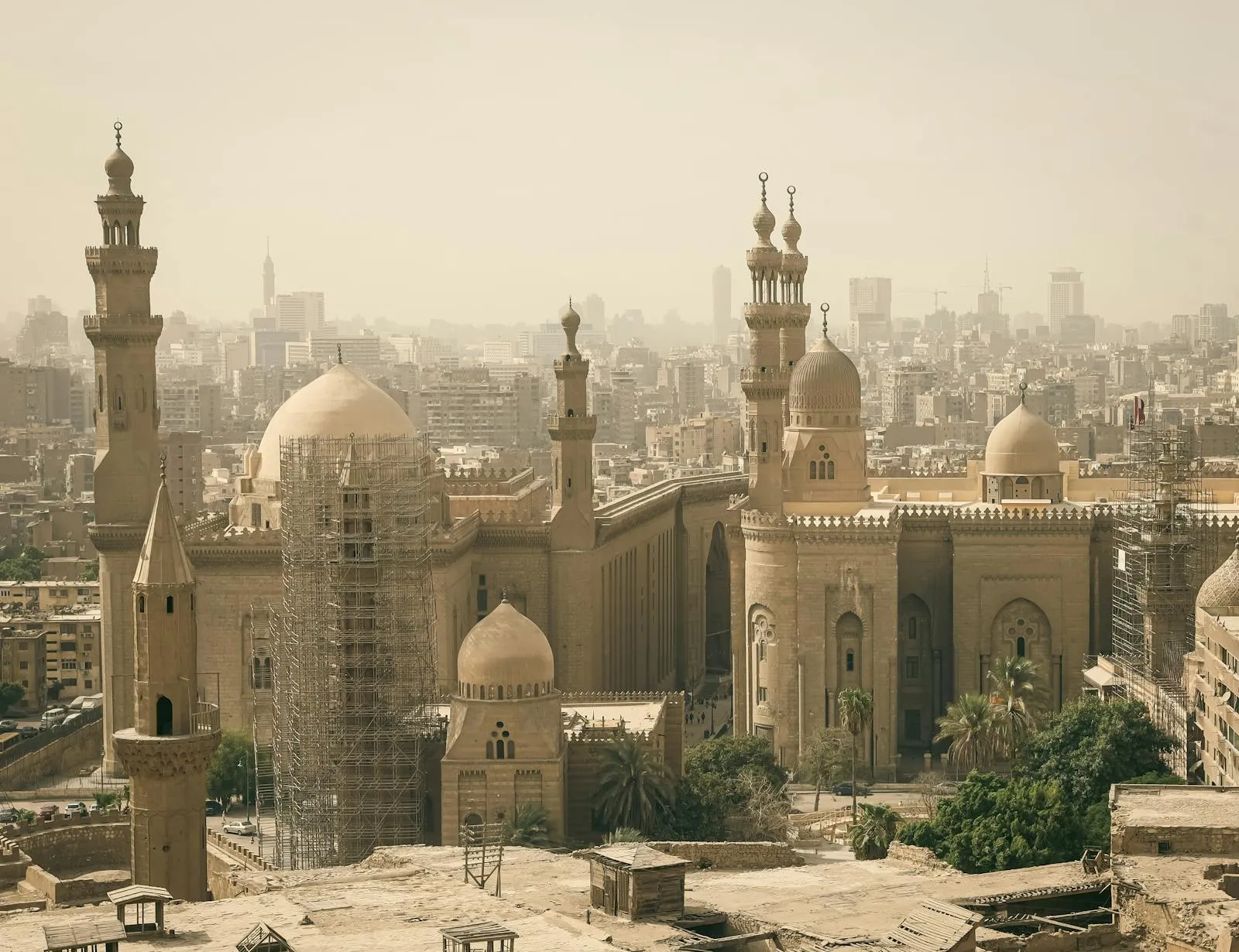
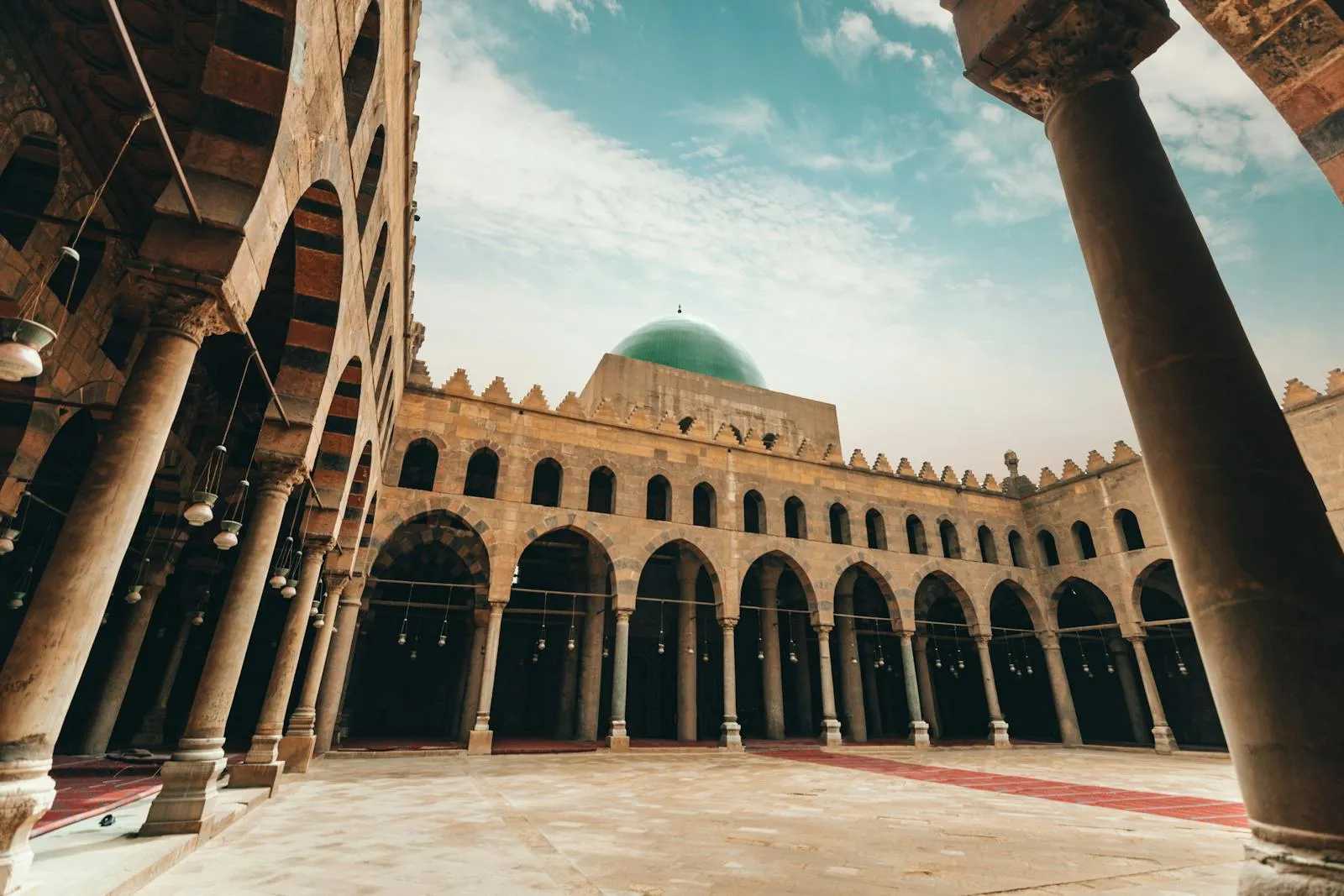
Egypt Travel Guide

Pharaonic temples, Saharan dunes, and Red Sea reefs. Your complete handbook for exploring the land of ancient wonders.

🇪🇬 Egypt All Travel Styles Low-Medium Budget 21 Sections

Overview & Why Visit

Panoramic view of Egypt

Egypt occupies the northeast corner of Africa, bridging two continents at the Sinai Peninsula and straddling the Nile — the world’s longest river. With over 5,000 years of continuous civilisation, the country holds one of humanity’s most extraordinary archaeological legacies. From the Pyramids of Giza, the sole surviving Ancient Wonder, to the rock-hewn temples of Abu Simbel, Egypt’s monuments are genuinely awe-inspiring even in an age of digital saturation.

Beyond the pharaonic headline acts, Egypt rewards exploration with Ottoman-era mosques in Islamic Cairo, world-class coral reefs along the Red Sea coast, vast Saharan landscapes in the Western Desert, and a food culture built around generous portions and bold flavours. The country is affordable, visa-accessible, and well connected by domestic flights, overnight trains, and modern intercity buses.

Population
106M
Largest Arab country by population
Size
1M km²
Roughly 1,001,000 km²; 96% desert, most life along the Nile
Currency
EGP (£E)
Egyptian Pound; 1 EUR ≈ 58 EGP (mid-2026)
Daily Budget
€21–80
Per person; backpacker to mid-range
  • Ancient heritage — temples, tombs, and monuments spanning three millennia, including the Grand Egyptian Museum (opened Nov 2025)
  • Red Sea diving — globally ranked reefs at Ras Mohammed, the Brothers Islands, and Elphinstone, with visibility routinely exceeding 30 m
  • Budget-friendly — street-food meals under EGP 60 (≈ €1), comfortable double rooms from EGP 1,200 (≈ €21), and inexpensive intercity transport
  • Cultural richness — Coptic churches, Sufi shrines, Nubian villages, and one of the Arab world’s most vibrant street-food scenes
  • Desert adventure — overnight safaris in the White Desert, oasis hopping in Siwa, and sunrise treks across Sinai dunes
💰 Budget Snapshot

Egypt is one of the most affordable destinations reachable from Europe. Street food costs pennies (koshari EGP 25–50 / ≈ €0.40–0.85), comfortable double rooms start at EGP 1,200 (≈ €21), and a Cairo–Luxor sleeper train costs EGP 1,500 (≈ €26). Even private guided tours are affordable by international standards. Since late 2024, most major archaeological sites accept only card payments — carry a Visa or Mastercard.

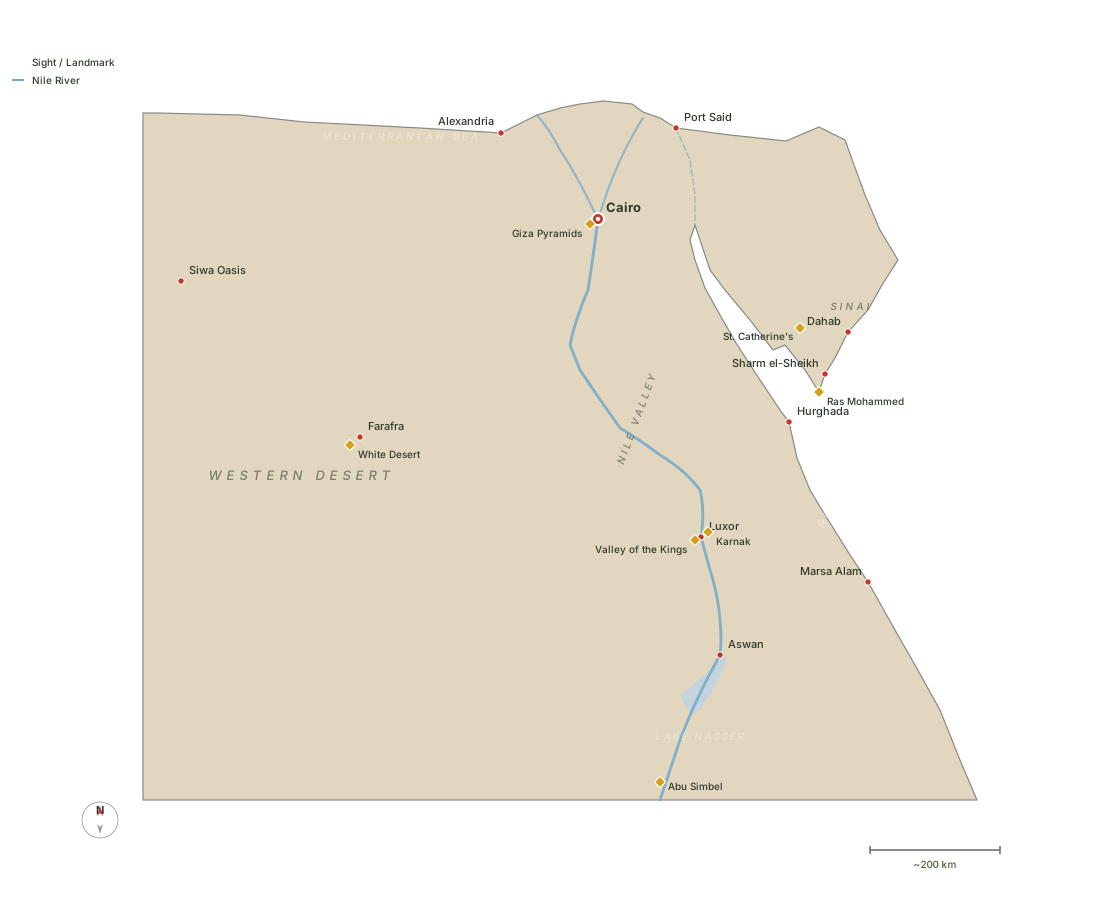
Map of Egypt

Map view of Egypt

Egypt stretches roughly 1,000 kilometres from the Mediterranean coast to the Sudanese border, with the Nile carving a narrow fertile corridor through otherwise barren desert. Most destinations cluster along two axes: the Nile Valley running south from Cairo through Luxor to Aswan, and the Red Sea coast running parallel to the east. The Sinai Peninsula juts northeast between the two gulfs, while the Western Desert oases lie isolated to the west. Understanding this geography is essential for planning routes and estimating travel times.

Map of Egypt showing key destinations
📍 Reading the Map

Cairo sits at the apex of the Nile Delta, serving as the transport hub connecting all regions. The Nile flows north from Aswan through Luxor to Cairo — “Upper Egypt” is confusingly the southern part (higher elevation). The Red Sea coast runs parallel to the Nile Valley, roughly 4–6 hours east by bus. The Sinai Peninsula is reached via tunnels under the Suez Canal or by ferry. Dashed lines on the map show the three suggested routes connecting major hubs.

Best Time to Visit

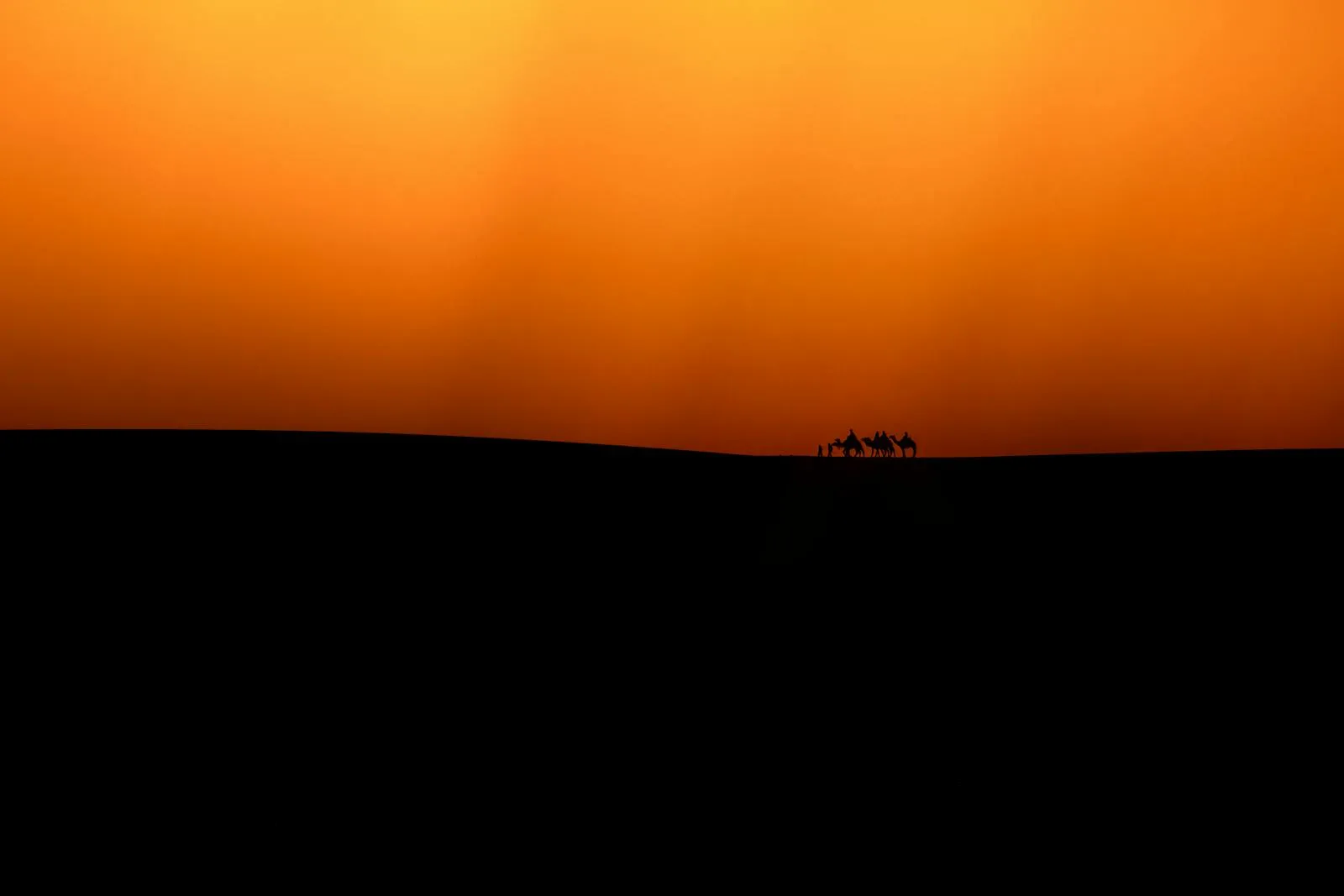
Camels silhouetted against an Egyptian sunset

Egypt is a year-round destination, but the sweet spot for most travellers falls between October and April, when daytime temperatures at the Nile Valley sites hover in the comfortable 20–30 °C range. The Red Sea coast is diveable twelve months a year, with water temperatures above 22 °C even in winter. Summer heat inland is extreme — Luxor and Aswan regularly hit 40–45 °C between June and August — but the coast and Sinai mountains remain manageable.

Month Season Best Regions Crowds Prices Rating
OctoberEarly peakNile Valley, Cairo, Red Sea🟡 Rising🟡 Rising⭐⭐⭐⭐
NovemberPeak / dryEverywhere ideal🔴 High🔴 High⭐⭐⭐⭐⭐
DecemberPeak / coolEverywhere; Christmas/NY surge🔴 Very High🔴 Peak⭐⭐⭐⭐⭐
JanuaryPeak / coolEverywhere; best temple weather🔴 Very High🔴 Peak⭐⭐⭐⭐⭐
FebruaryPeak / coolAll regions; Abu Simbel Sun Festival (22nd)🔴 High🔴 High⭐⭐⭐⭐⭐
MarchShoulderCairo, coast; Nile warming up🟡 Moderate🟡 Moderate⭐⭐⭐⭐
AprilShoulder / hotCoast, Sinai; Khamsin risk inland🟡 Moderate🟡 Moderate⭐⭐⭐
MayHotRed Sea, Sinai; inland extreme🟢 Low🟢 Low⭐⭐
JuneHot / lowRed Sea coast only🟢 Very Low🟢 Lowest⭐⭐
JulyHot / lowRed Sea coast only🟢 Very Low🟢 Lowest⭐⭐
AugustHot / lowRed Sea coast; Egyptian domestic holidays🟢 Low🟢 Low⭐⭐
SeptemberLate hotRed Sea; inland cooling slowly🟢 Low🟢 Low⭐⭐⭐
⚠️ Ramadan

During the holy month (dates shift ~11 days earlier each year) many restaurants close during daylight hours, though tourist-area eateries usually stay open. Evenings come alive with iftar meals and festive atmosphere. Respectful visitors often find it a rewarding time to travel — just plan meals ahead and avoid eating or drinking openly in public during fasting hours.

Climate & Weather

Egypt has an arid desert climate with very little rainfall outside the Mediterranean coast. Summers are hot to extreme, especially in Upper Egypt (Luxor, Aswan), while winters are mild and dry — perfect for sightseeing. The Red Sea coast is moderated by sea breezes, making it comfortable year-round for beach and diving holidays.

Cairo and the Delta receive occasional winter rain (November–February), while Alexandria gets the most precipitation in the country — still modest by European standards at roughly 180 mm per year. South of Cairo, rain is essentially non-existent; Luxor averages less than 1 mm annually.

⚠️ Khamsin Winds

Hot, sand-laden winds blow from the Sahara between March and May, occasionally reducing visibility and spiking temperatures by 10–15 °C for two to three days at a time. If visiting in spring, check forecasts and carry a buff or scarf to cover nose and mouth.

Humidity: Low across most of the country (15–35%), which makes dry heat more tolerable than equivalent temperatures in tropical destinations. The Red Sea coast is the exception, with summer humidity occasionally reaching 60–70% — offset by consistent onshore breezes.

Regional Temperatures

Temperatures vary dramatically between the Mediterranean north and the Saharan south. Use these regional averages to pick the right window for your itinerary.

MonthCairoLuxorHurghadaAswan
Jan9–19 °C6–23 °C11–22 °C7–23 °C
Feb10–20 °C7–25 °C11–23 °C8–25 °C
Mar12–24 °C11–29 °C14–25 °C12–30 °C
Apr15–28 °C15–35 °C18–29 °C17–35 °C
May18–33 °C20–39 °C22–33 °C21–39 °C
Jun21–35 °C23–41 °C24–36 °C24–42 °C
Jul23–35 °C24–41 °C26–37 °C25–42 °C
Aug23–35 °C24–41 °C27–37 °C25–42 °C
Sep21–33 °C22–38 °C24–34 °C23–40 °C
Oct18–30 °C18–35 °C21–32 °C20–36 °C
Nov14–25 °C12–29 °C17–28 °C14–30 °C
Dec10–20 °C7–24 °C13–24 °C9–25 °C

Red Sea water temperatures: 21–22 °C in winter, 27–29 °C in summer. A 3 mm shorty suffices year-round; a 5 mm full suit adds comfort for deep winter dives in January–February.

💡 Best Strategy

Arrive in Egypt between late October and early November. Start with Cairo (Pyramids, GEM, Islamic Cairo), then head south to Luxor and Aswan when daytime highs are a comfortable 25–30 °C. Finish at the Red Sea coast or Sinai for diving and beach time. This window avoids peak Christmas/NY pricing while delivering ideal temple-visiting weather across the entire Nile Valley.
Holidays & Festivals

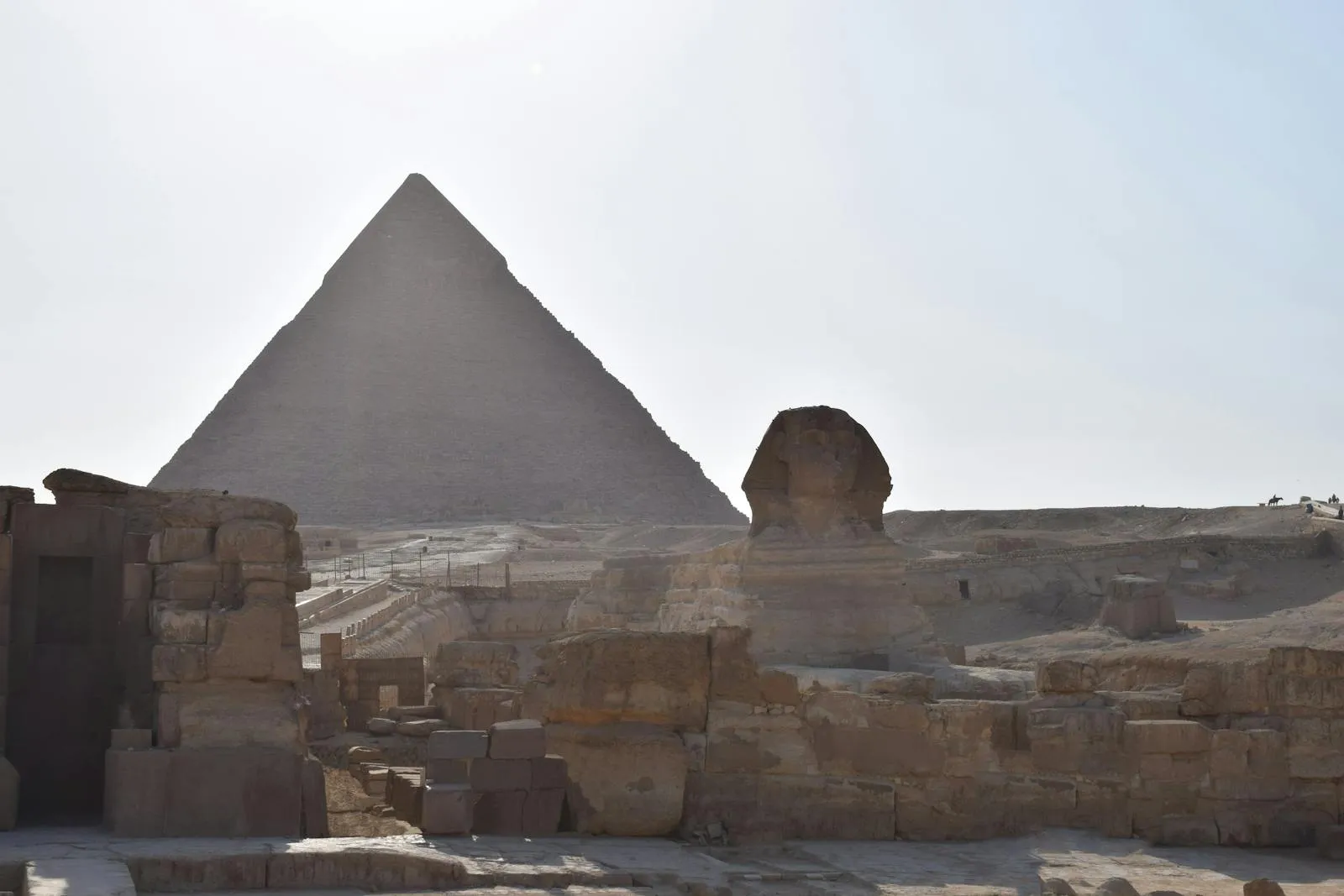
Illuminated mosque in Egypt

Egypt observes Islamic, Coptic Christian, and secular national holidays. Islamic dates follow the lunar calendar and shift roughly 11 days earlier each Gregorian year — always confirm exact dates before booking.

Date / periodHoliday or festivalImpact on travel
7 JanCoptic ChristmasCelebrated by Egypt’s ~10% Coptic population. Midnight masses in Cairo’s Coptic Quarter and across Upper Egypt
22 Feb & 22 OctAbu Simbel Sun FestivalSunlight illuminates the inner sanctuary of Ramesses II’s temple. Large crowds — book Abu Simbel and Aswan accommodation well ahead
Apr / MaySham el-NessimAncient spring festival, day after Coptic Easter. Egyptians picnic outdoors; parks packed. Feseekh (salted fish) is the traditional food
23 JulRevolution DayNational holiday marking the 1952 revolution. Government offices closed; little impact on tourism
6 OctArmed Forces DayPublic holiday; military parades. Some sites may have adjusted hours
Lunar (30 days)RamadanHoly month of fasting. Many eateries close during daylight; tourist restaurants usually open. Festive evenings with iftar meals. Avoid eating openly in public during fasting hours
Lunar (3 days)Eid al-FitrEnd-of-Ramadan celebration. Domestic travel surges — transport and hotels book out fast
Lunar (4 days)Eid al-AdhaFeast of Sacrifice. Similar busy-travel pattern. Some sites have adjusted hours
LunarMoulid an-NabiProphet Muhammad’s birthday. Festive street celebrations with sweets, lanterns, and Sufi music, especially in Cairo’s old quarters
⚠️ Islamic holiday dates

Ramadan, Eid al-Fitr, Eid al-Adha, and Moulid an-Nabi follow the lunar calendar and shift approximately 11 days earlier each Gregorian year. Always check exact dates before finalising your travel plans. During Eid holidays, domestic transport fills up quickly — book trains and flights in advance.
Regions of Egypt

Aerial view of the Egyptian landscape with the Nile cutting through desert

Egypt offers diverse landscapes and experiences across its regions.

Cairo & the Nile Delta landscape

Cairo & the Nile Delta

Cairo is a sprawling, chaotic, magnificent city of over 22 million people — the largest urban area in Africa and the Arab world. The capital anchors a region that spans the ancient necropolis of Giza on its western edge, the stepped pyramid fields of Saqqara and Dahshur to the south, and the green Nile Delta fanning northward to Alexandria and t...

Nile Valley & Upper Egypt landscape

Nile Valley & Upper Egypt

Upper Egypt — counterintuitively the southern part of the country, named for the higher elevation along the Nile — holds the densest concentration of pharaonic monuments on Earth. The stretch between Luxor and Aswan is the classic Nile Valley experience, best visited between October and March when temperatures are manageable.

Red Sea & Sinai landscape

Red Sea & Sinai

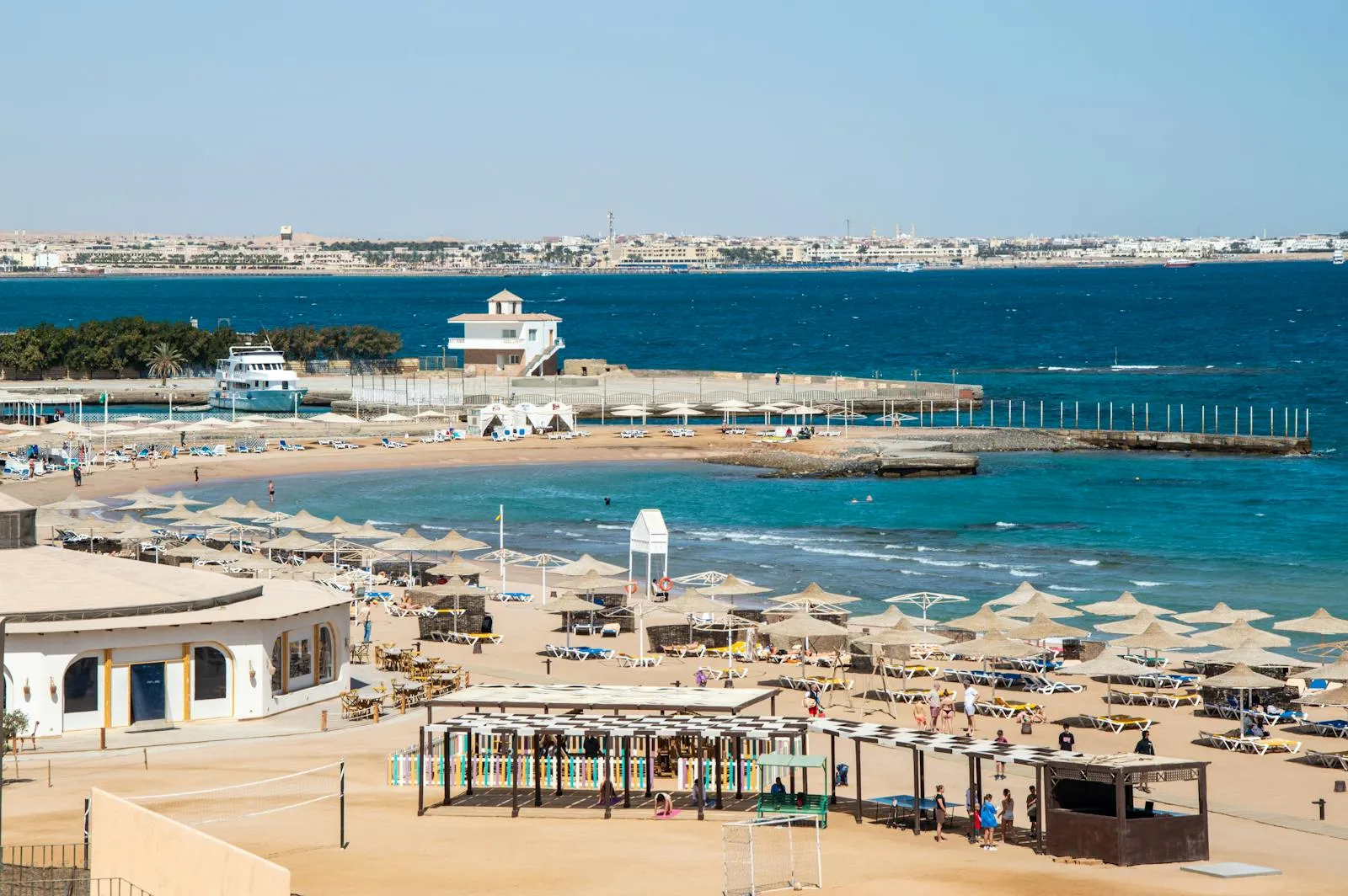
Egypt's Red Sea coast and the Sinai Peninsula form the country's adventure and relaxation corridor — world-class diving, desert mountains, and beach resorts ranging from backpacker camps to five-star compounds. The region operates almost as a separate tourism ecosystem, with direct international flights bypassing Cairo entirely.

Western Desert & Oases

The Saharan west is Egypt’s wildest region. Siwa Oasis near the Libyan border is a palm-fringed settlement with hot springs, salt lakes, and Berber culture. The White Desert’s chalk formations look extraterrestrial. Bahariya Oasis is the gateway for desert safaris.

Top Sightseeing

Ancient Egyptian temple columns

Egypt's archaeological sites span three millennia of pharaonic, Greco-Roman, Coptic, and Islamic heritage. Iconic monuments attract millions, but even heavily visited sites retain their power — and many lesser-known temples offer near-solitary experiences. Since late 2024, most major sites accept only card payments at ticket booths; carry a Visa or Mastercard.

  • Ancient wonders — the Giza Pyramids, Abu Simbel, and Karnak alone justify the trip, but dozens of stunning temples lie between them along the Nile
  • Royal tombs — the Valley of the Kings holds 70+ decorated tombs; three are included in the standard ticket, with Tutankhamun's and Seti I's tombs available as extras
  • Living heritage — Islamic Cairo's medieval street grid, Coptic churches, and Nubian villages are as compelling as the pharaonic sites
  • Natural spectacles — the White Desert's chalk formations and the Red Sea's coral gardens complete a remarkably diverse sightseeing portfolio
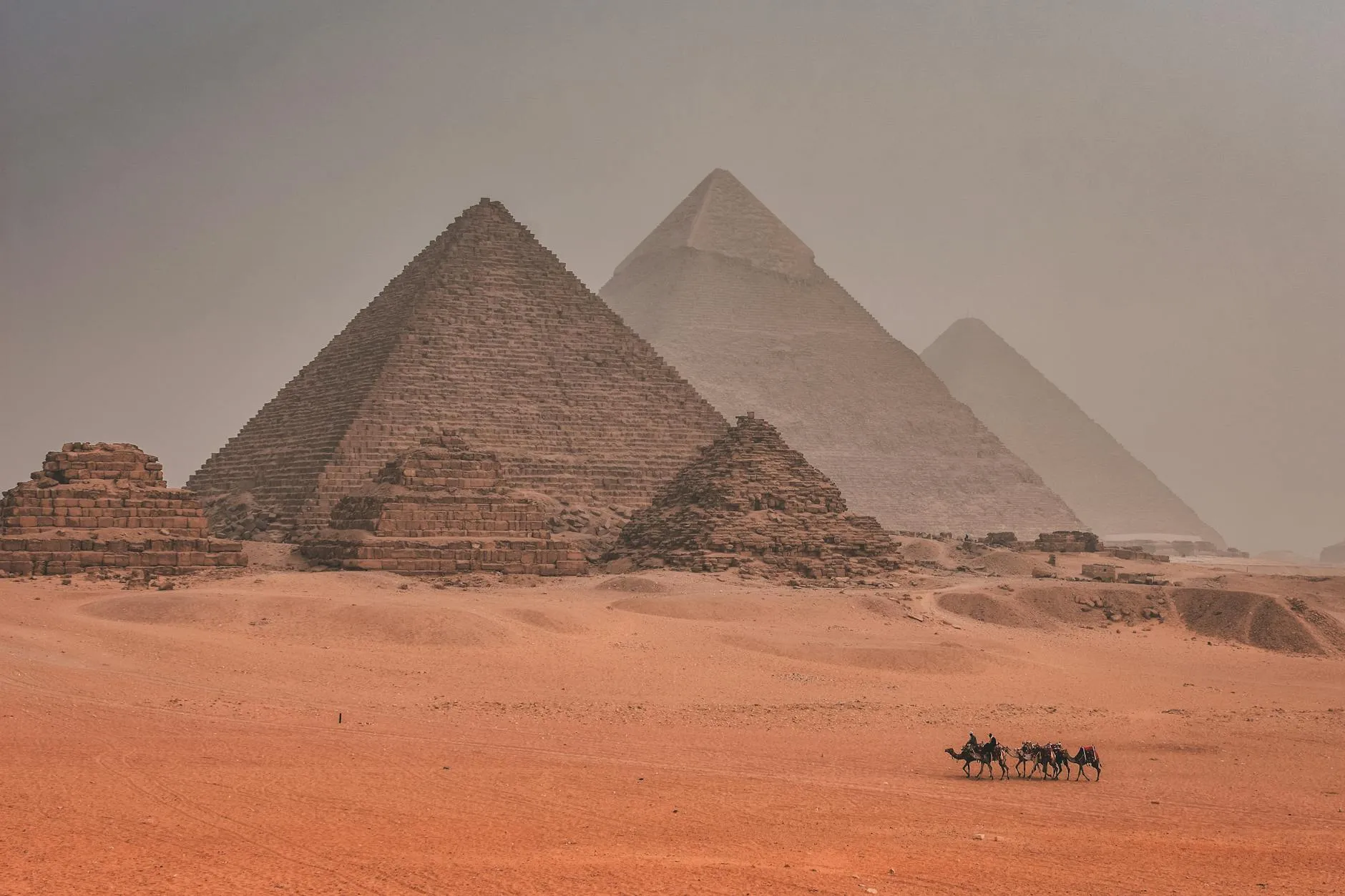
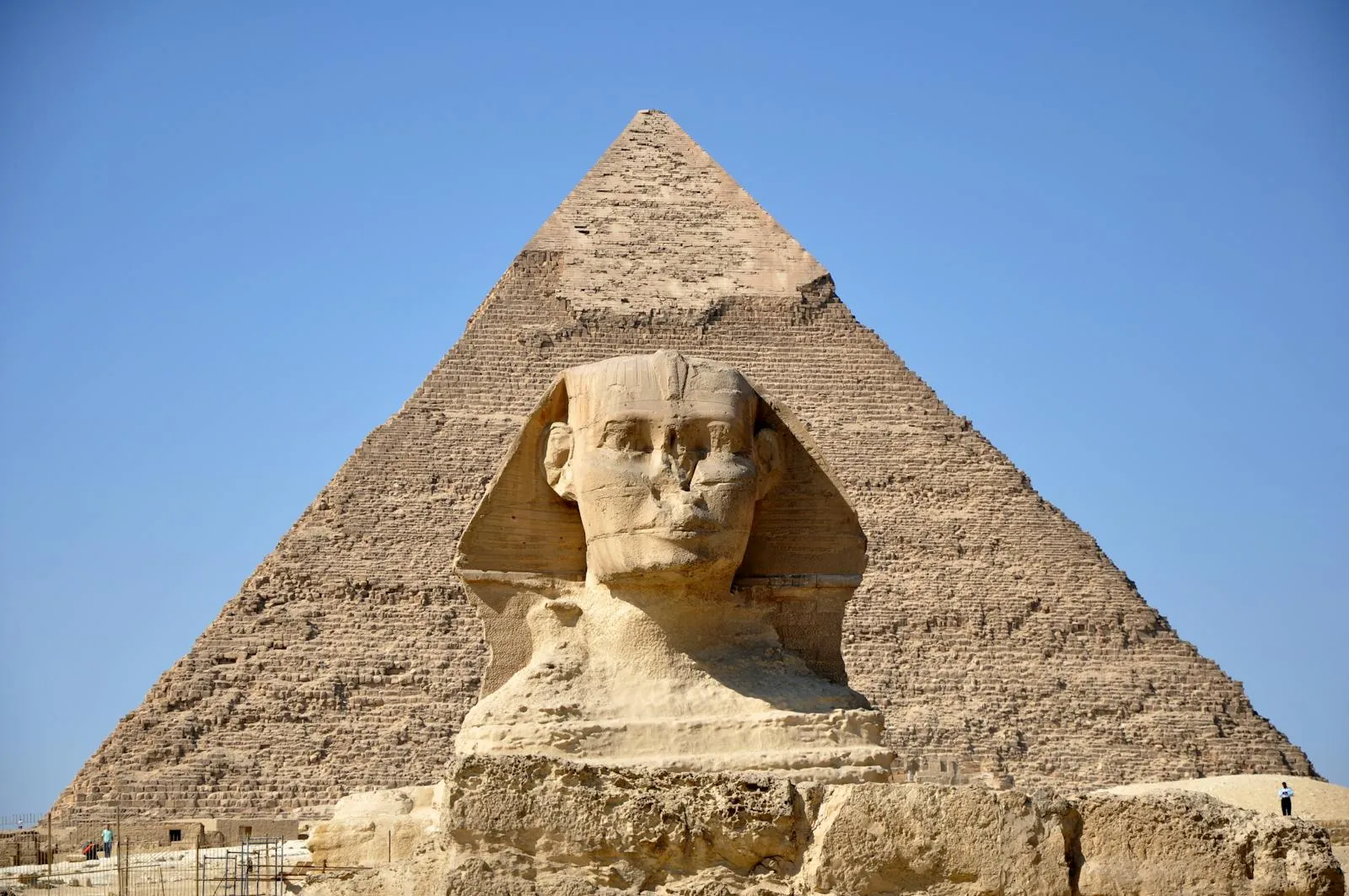
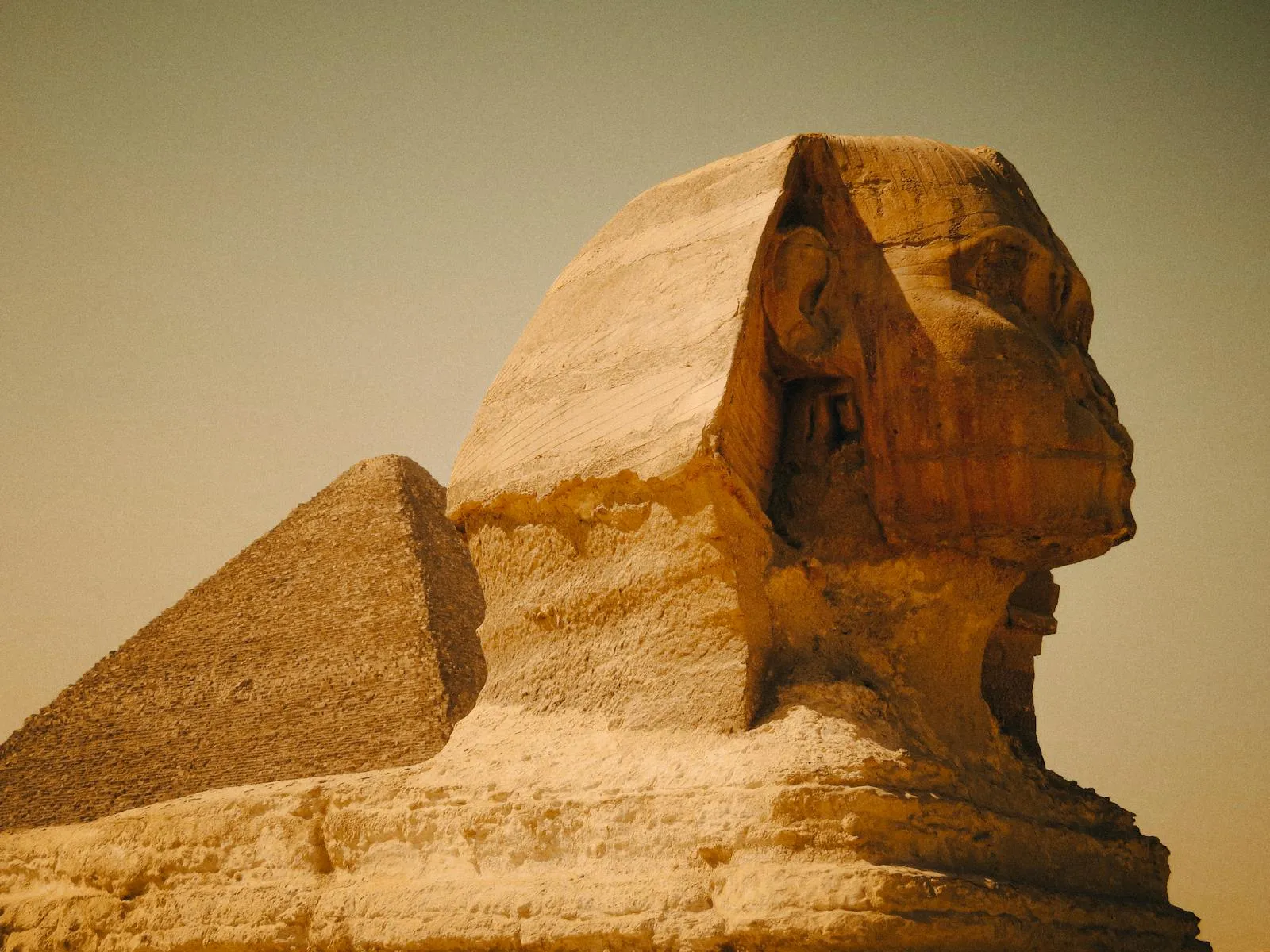
Pyramids of Giza and Great Sphinx

Pyramids of Giza & Great Sphinx

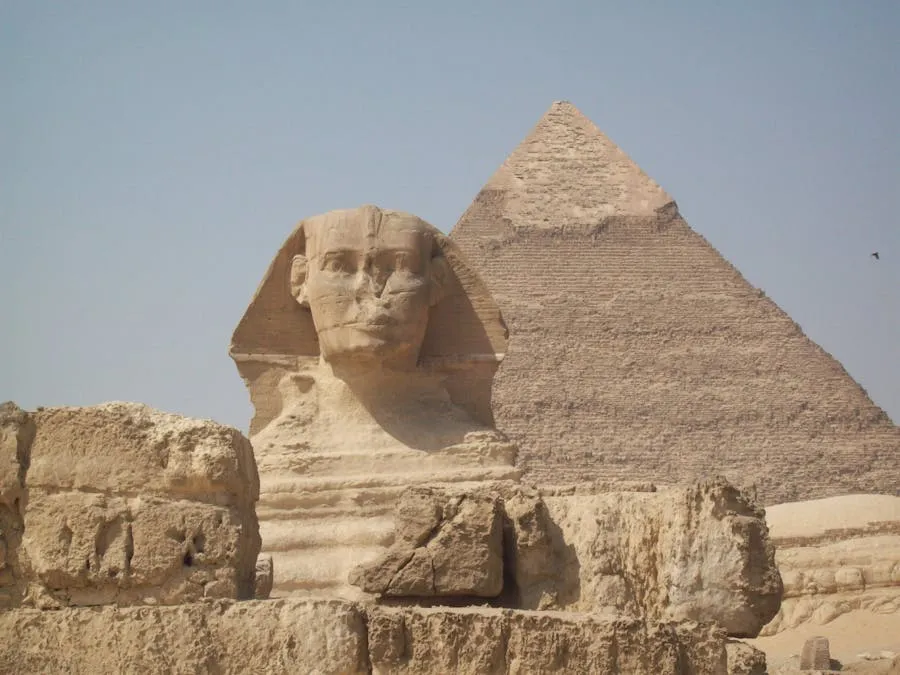
The sole surviving Ancient Wonder. Three pyramids, the enigmatic Sphinx, and the GEM museum next door. Site entry EGP 600 (≈ €10); Great Pyramid interior EGP 400 (≈ €7). Best at early morning or late afternoon.

Grand Egyptian Museum

Grand Egyptian Museum (GEM)

The world's largest archaeological museum, opened November 2025 at the Giza Plateau's edge. Tutankhamun's complete 5,000-piece collection, royal mummies, and colossal statuary. Full ticket EGP 1,200–1,590 (≈ €21–27). Allow 4–5 hours minimum.

Painted tomb interior in Valley of the Kings

Valley of the Kings

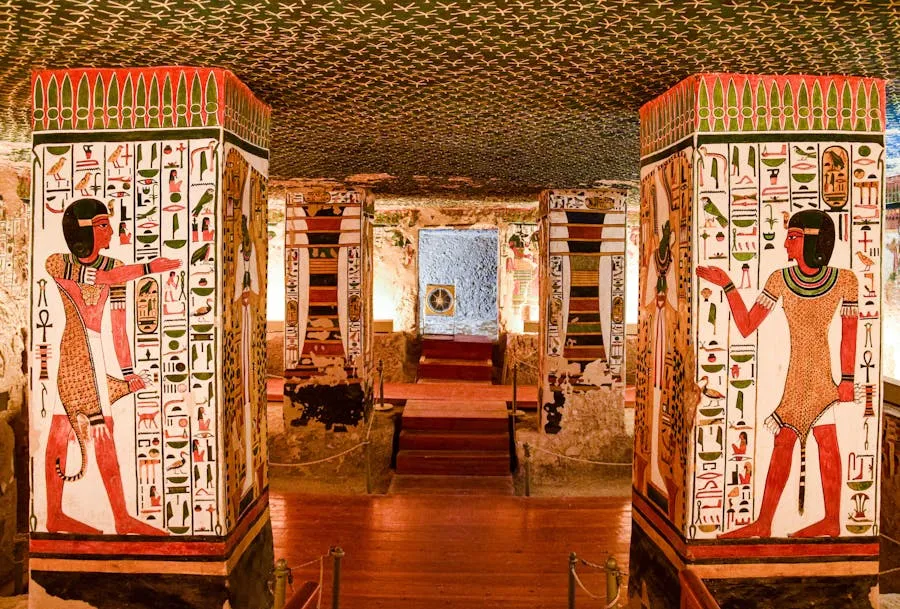
Burial ground of New Kingdom pharaohs on Luxor's West Bank. Over 70 tombs with vivid painted walls depicting the journey to the afterlife. Standard ticket EGP 600 (≈ €10, 3 tombs); Tutankhamun's tomb extra EGP 600.

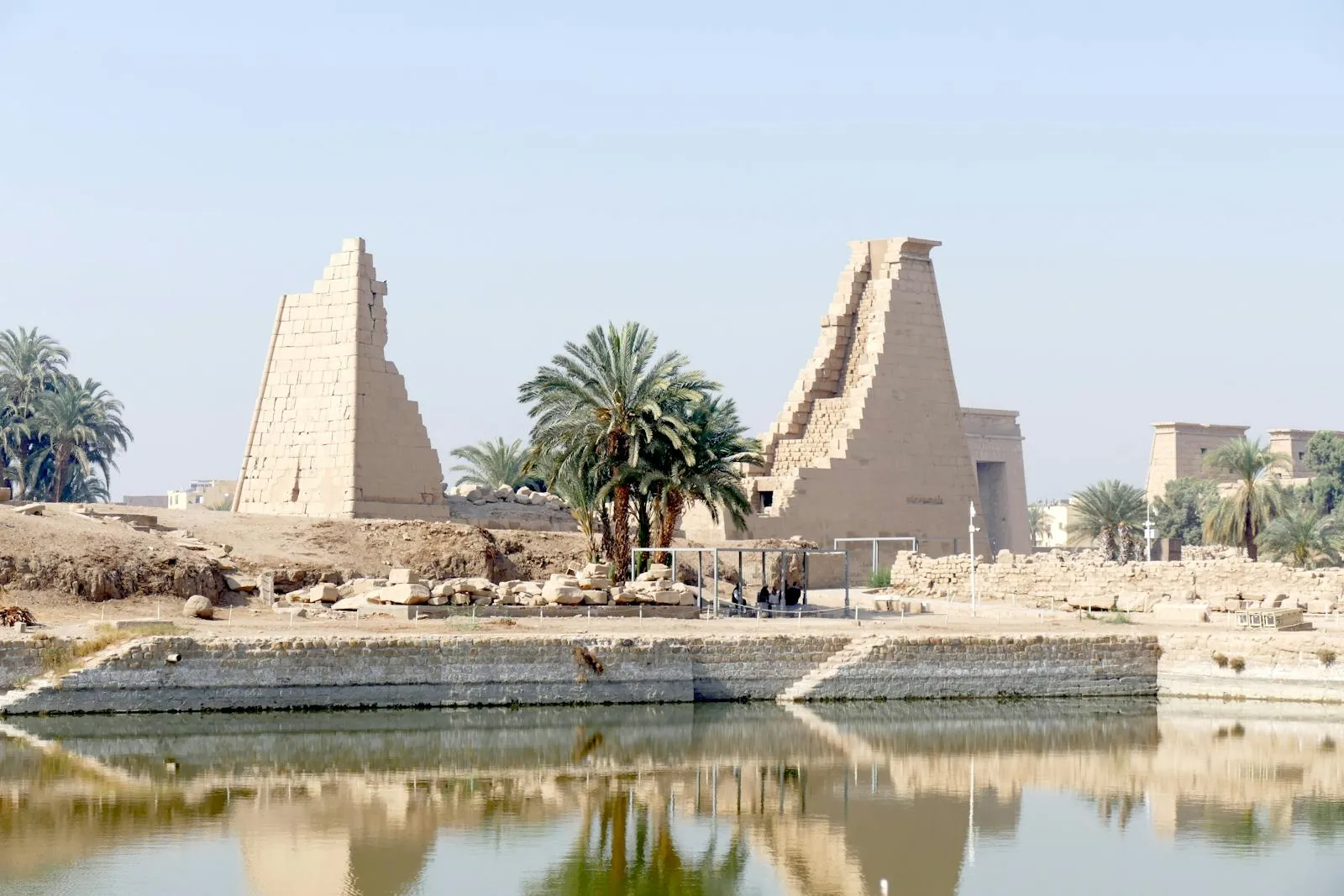
Hypostyle Hall columns at Karnak

Karnak Temple Complex

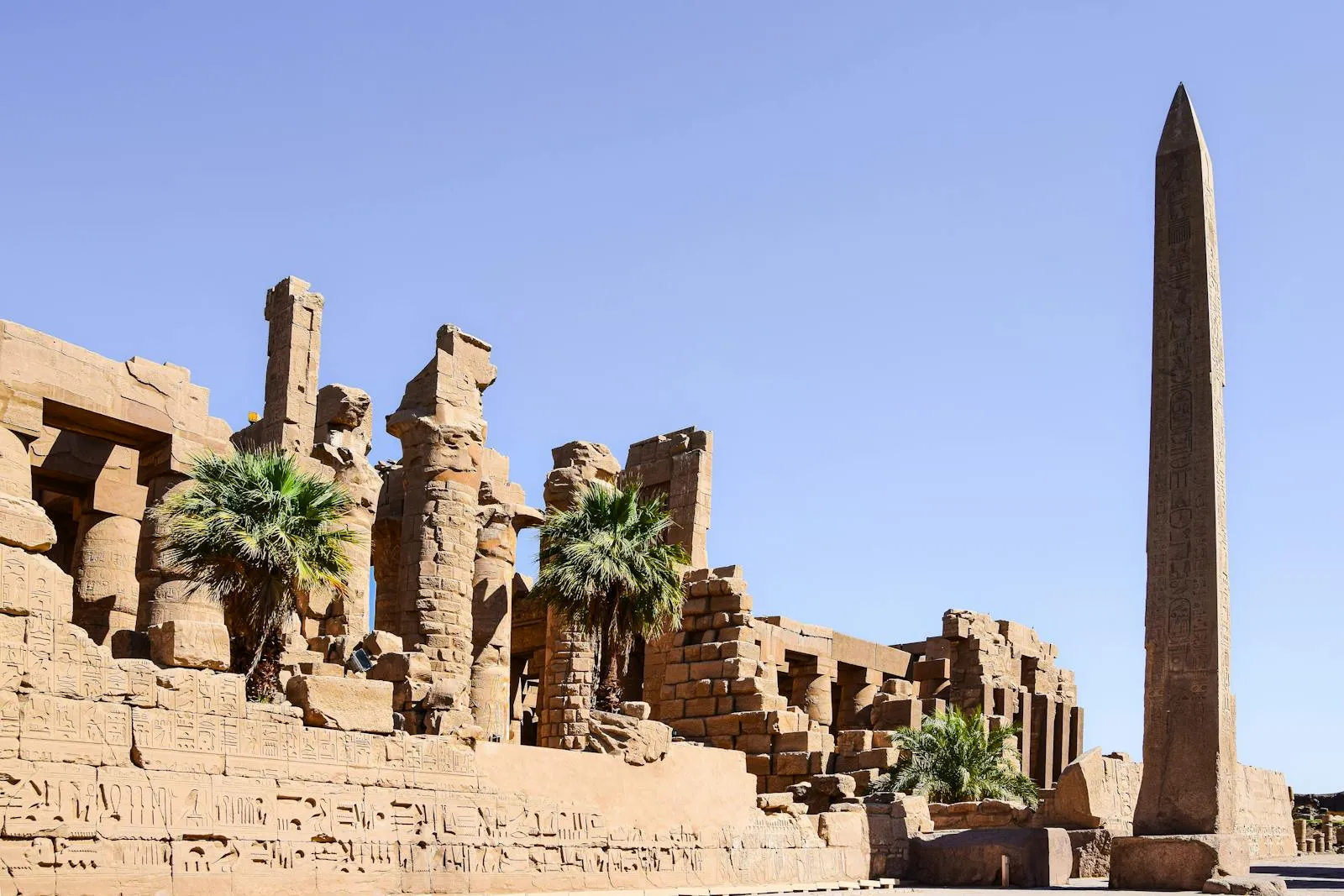
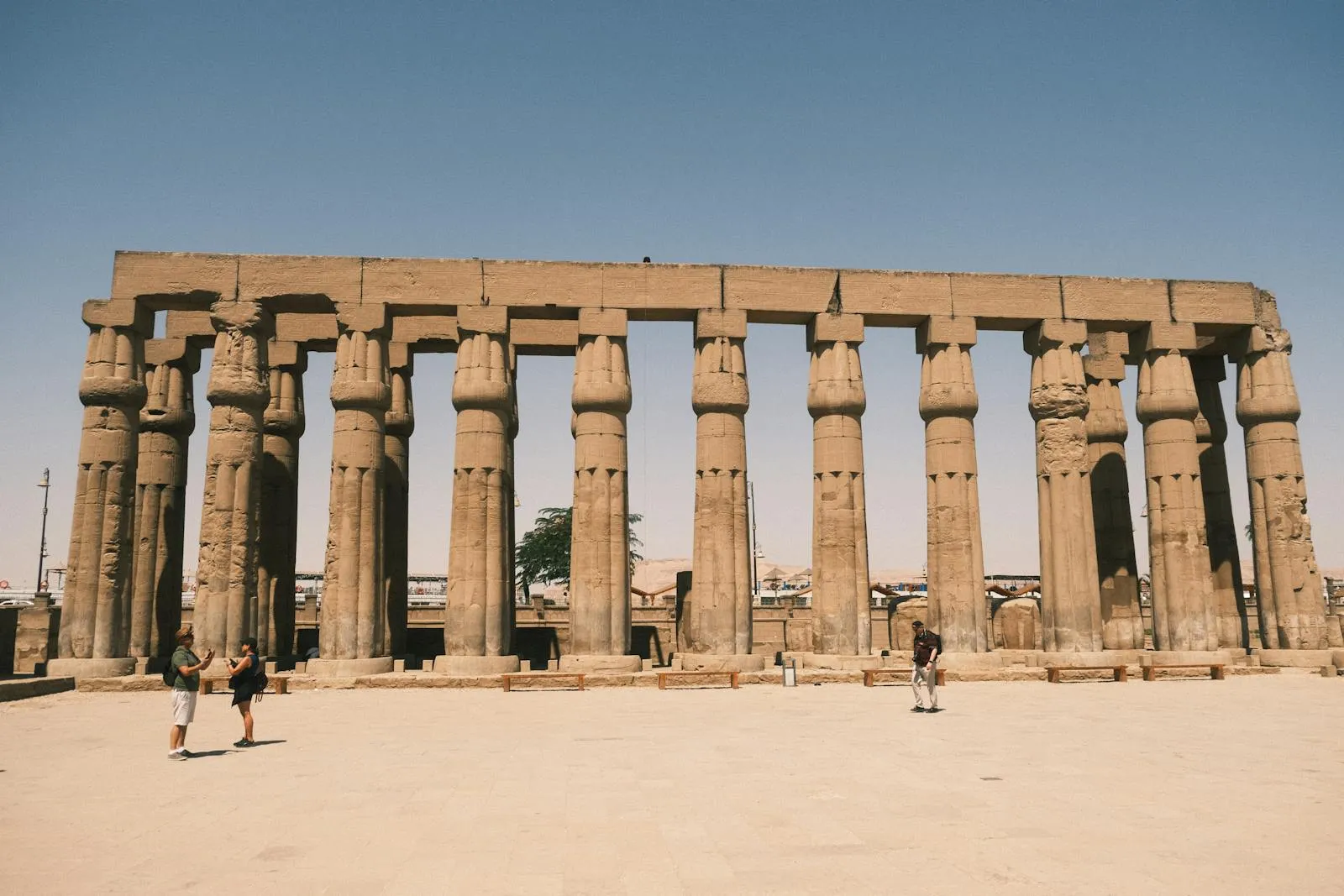
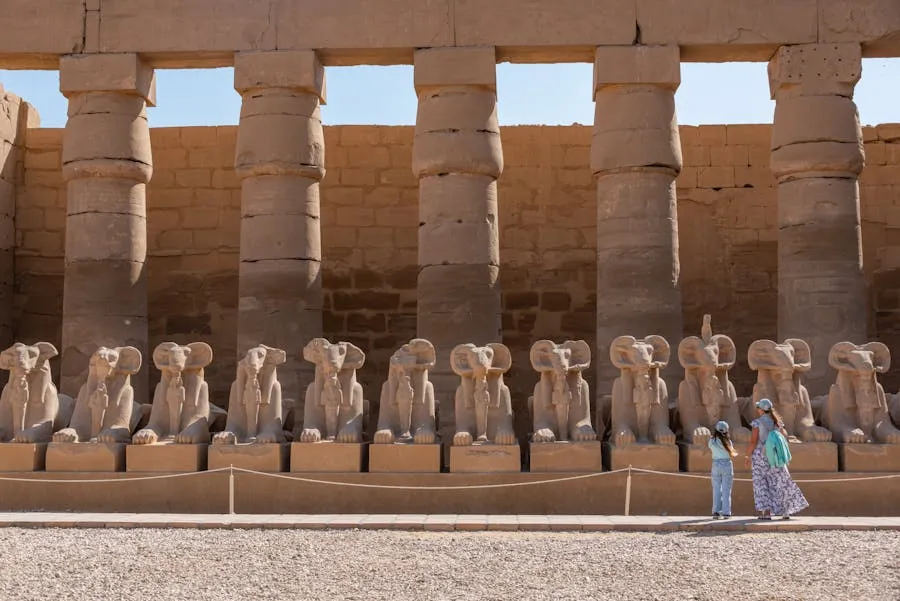
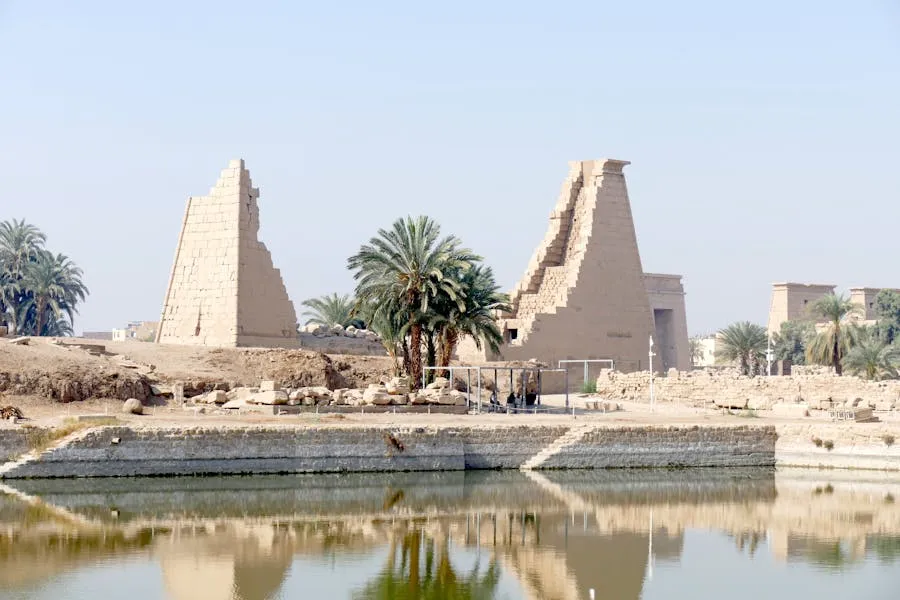
Egypt's largest temple, built and expanded over 1,500 years. The Great Hypostyle Hall — 134 columns in 16 rows — is staggeringly imposing. Entry EGP 450 (≈ €8). Sound-and-Light show recommended. Allow 2–3 hours.

Abu Simbel temple facade with colossal statues

Abu Simbel

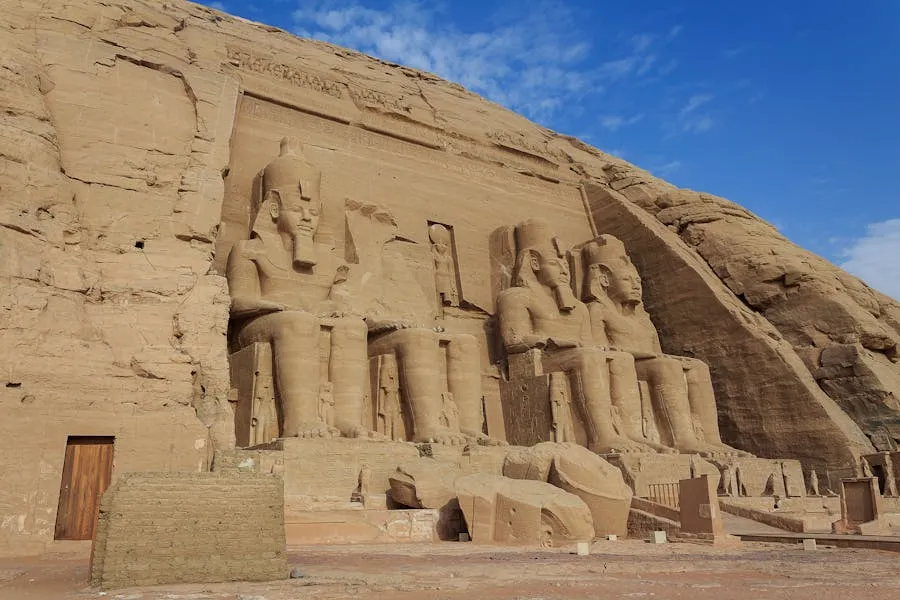
Ramesses II's twin rock-cut temples, relocated block by block in the 1960s to escape rising Lake Nasser waters. The Sun Festival (22 Feb & 22 Oct) illuminates the inner sanctuary. Entry EGP 500 (≈ €9). Arrive at dawn.

Luxor Temple illuminated at night

Luxor Temple

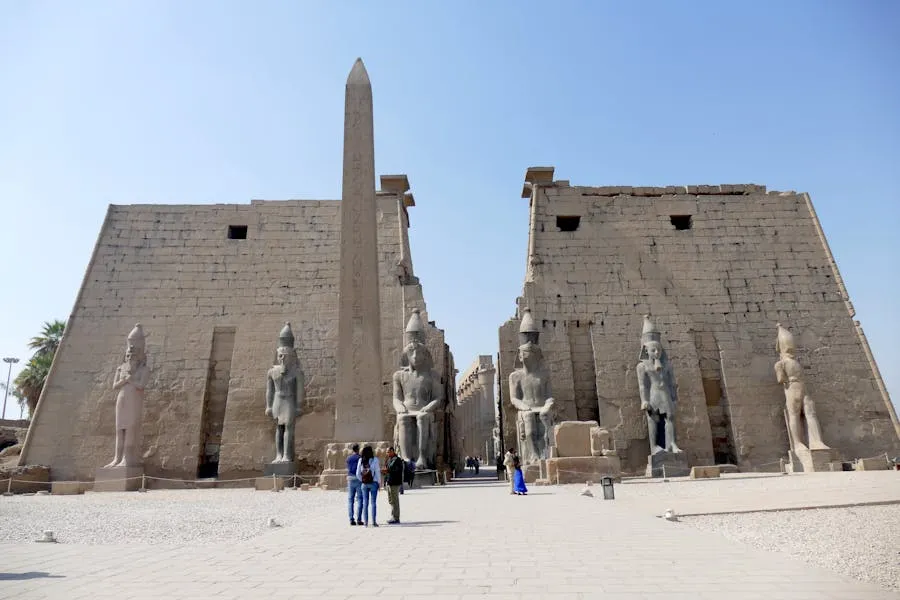
Beautifully lit at night, this New Kingdom temple sits in the heart of modern Luxor, connected to Karnak by the restored 2.7 km Avenue of Sphinxes. Entry EGP 360 (≈ €6). Visit at dusk for the best atmosphere and photographs.

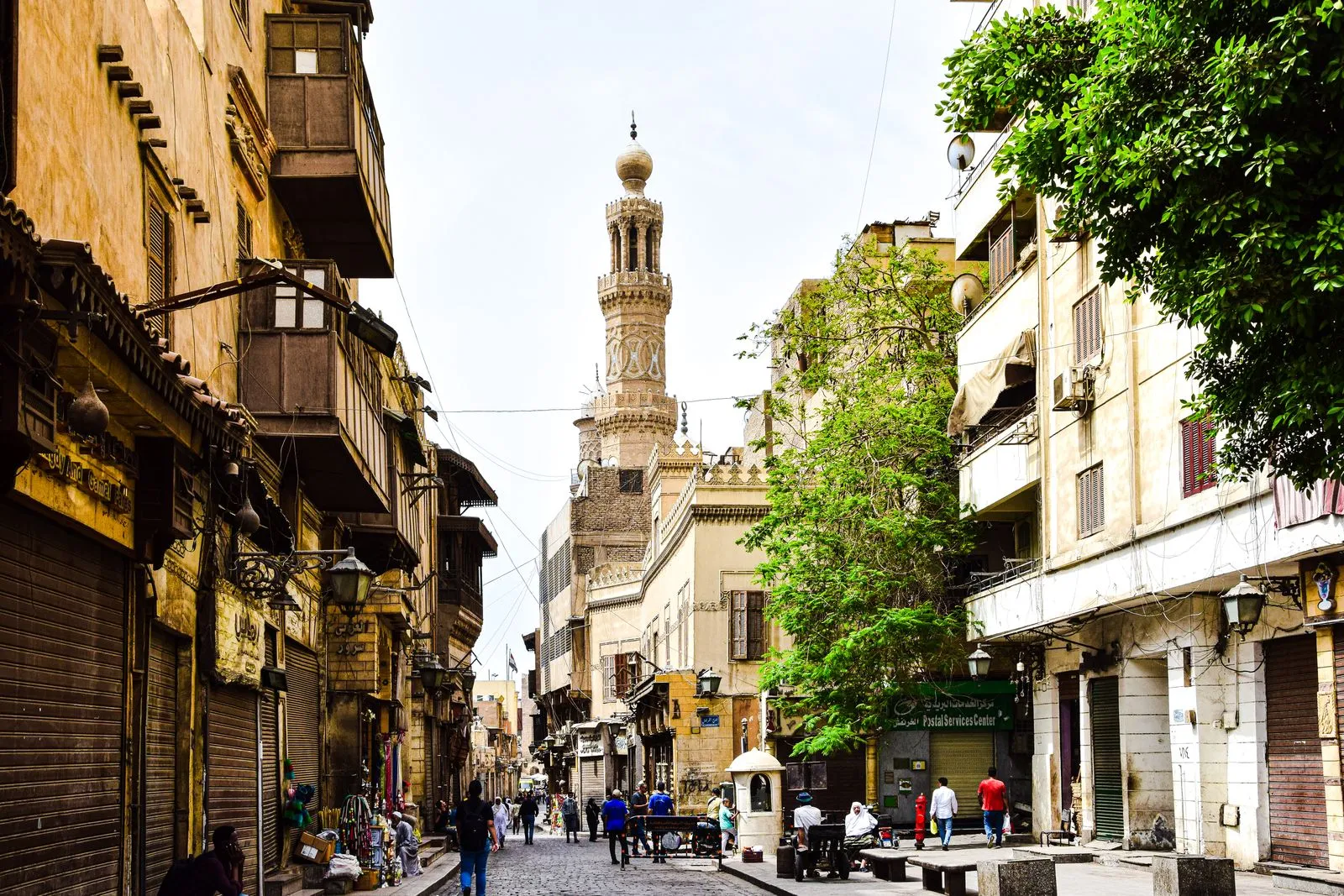
Historic street in Islamic Cairo

Islamic Cairo

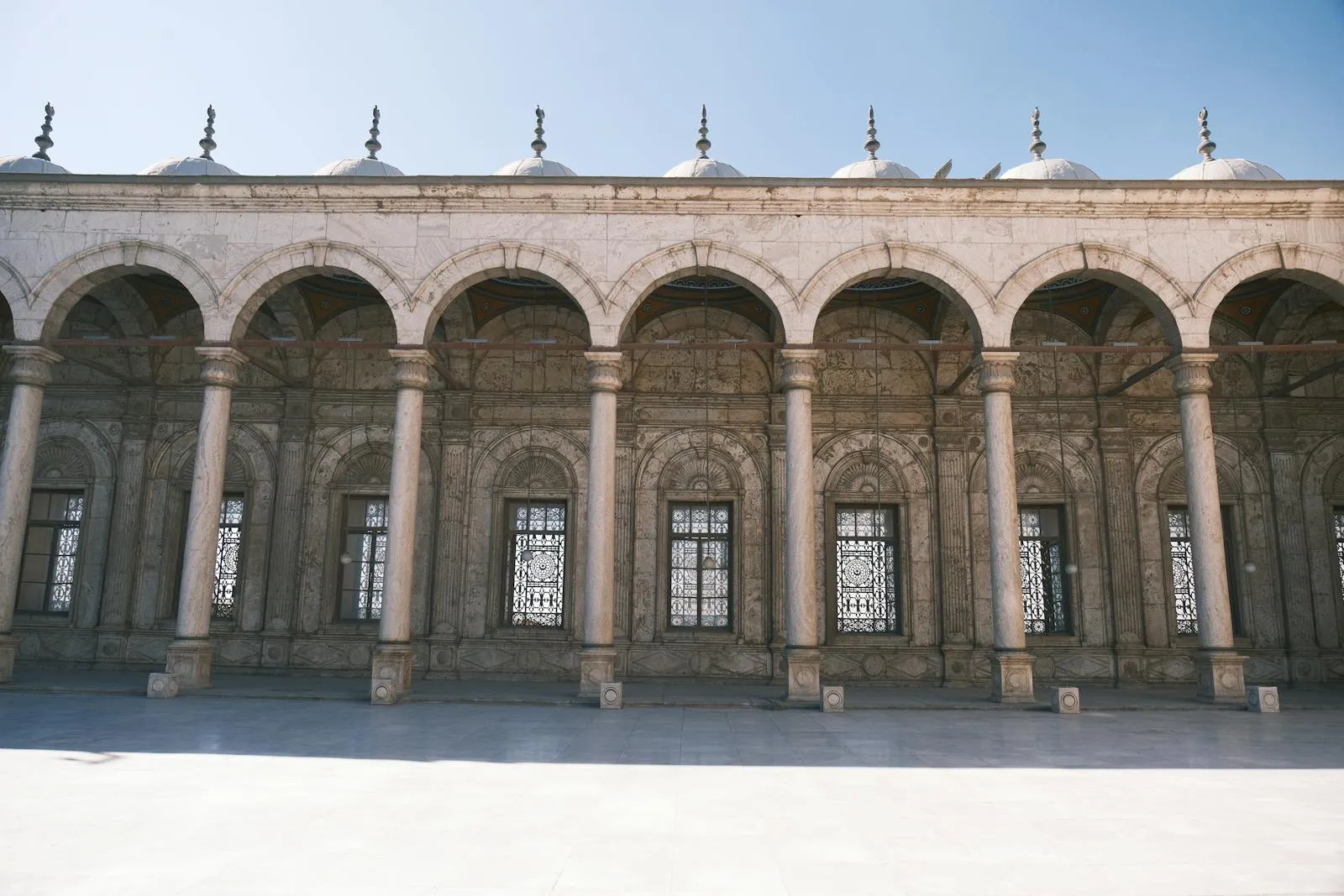
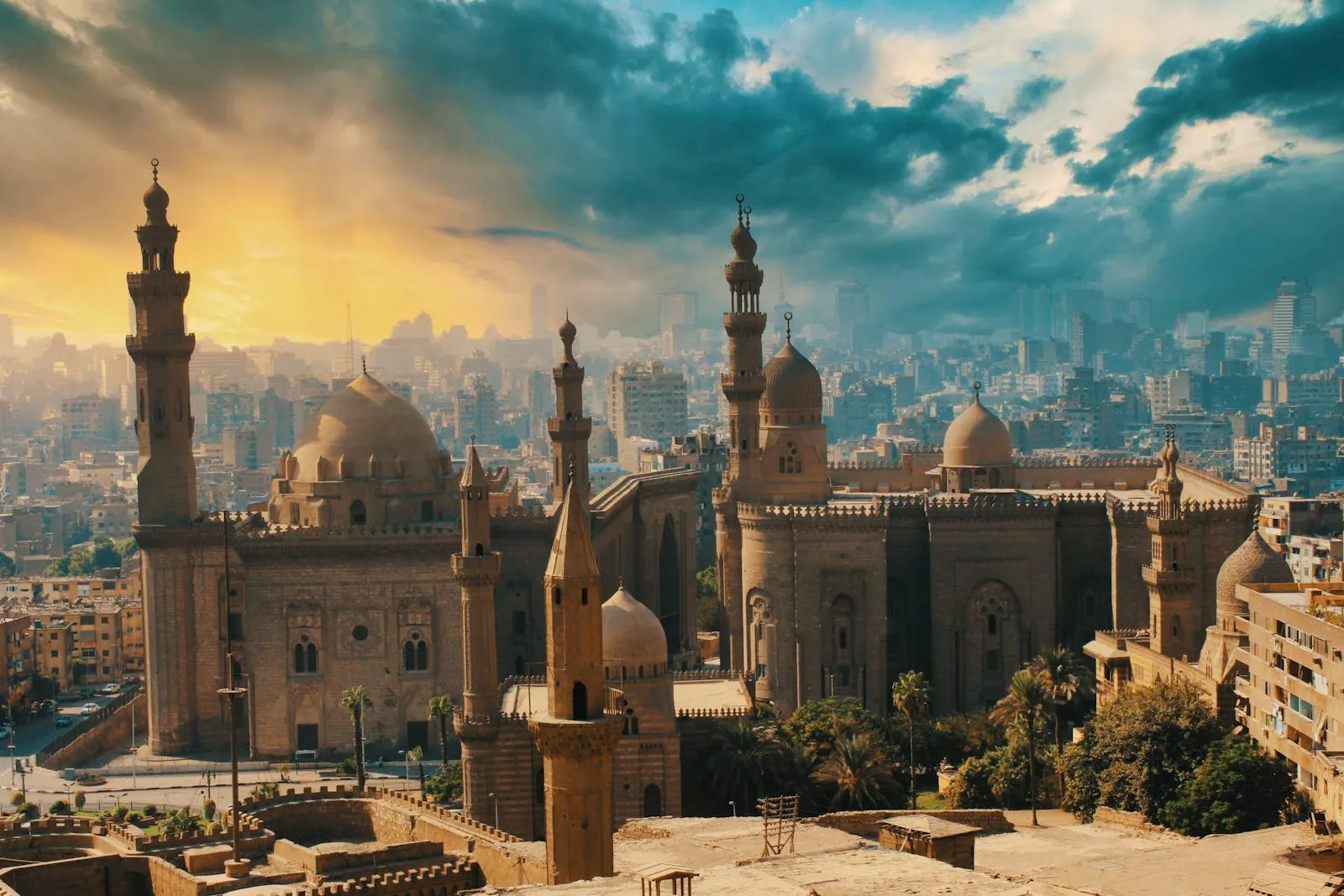
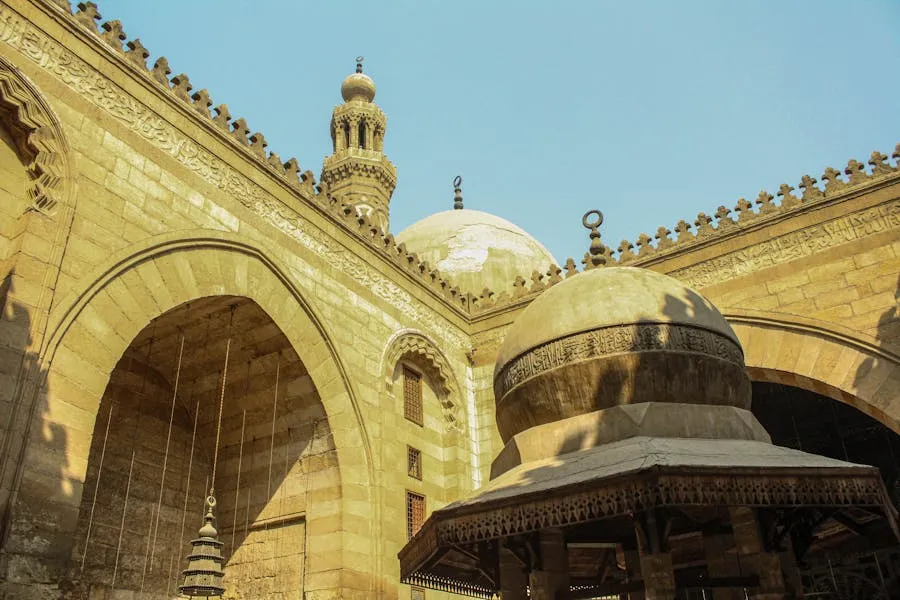
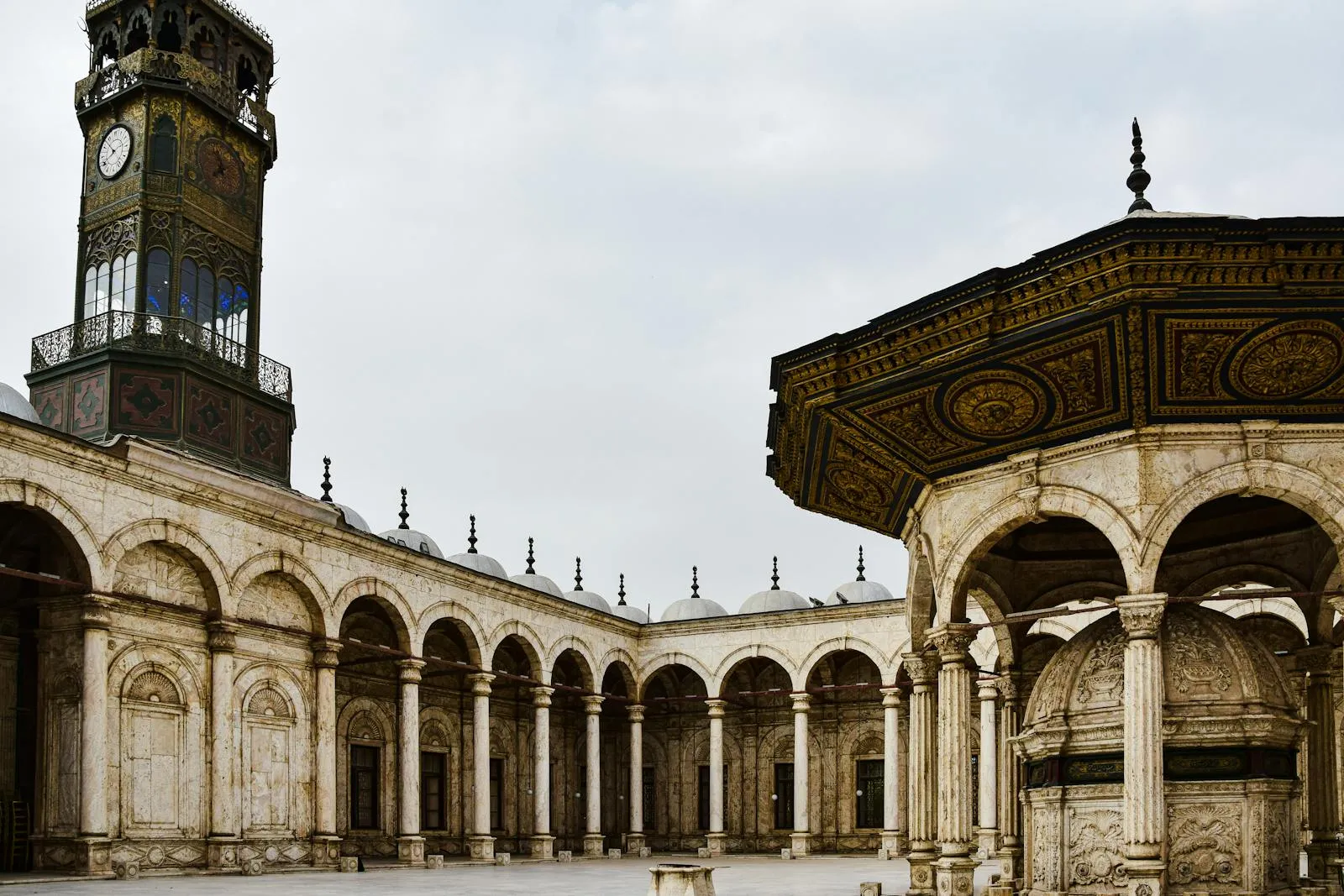
UNESCO-listed medieval quarter threaded with mosques, madrasas, and caravanserais. Walk Al-Muizz Street, browse Khan el-Khalili bazaar, and climb the Bab Zuweila minaret for rooftop views. Free to explore; mosque entry EGP 100–200.

Philae Temple on Agilkia Island

Philae Temple

Graceful Ptolemaic temple to Isis, rescued from flooding and reassembled on Agilkia Island near Aswan. Reached by motorboat (EGP 200–300 / ≈ €3–5 per boat). Entry EGP 360 (≈ €6). The Sound-and-Light show is one of Egypt's best.

Coral reef and tropical fish in Red Sea

Red Sea Coral Reefs

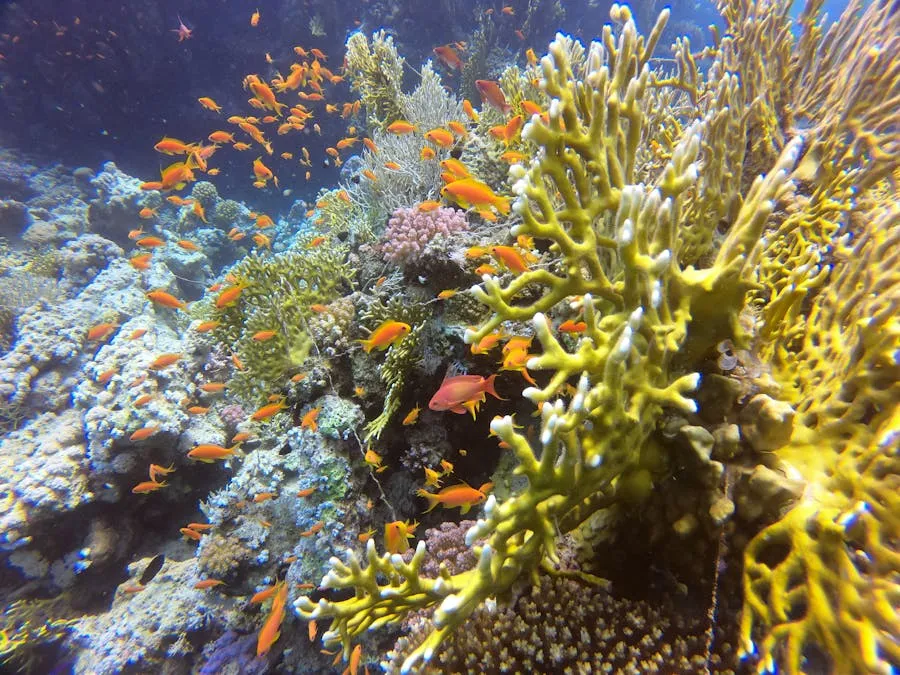
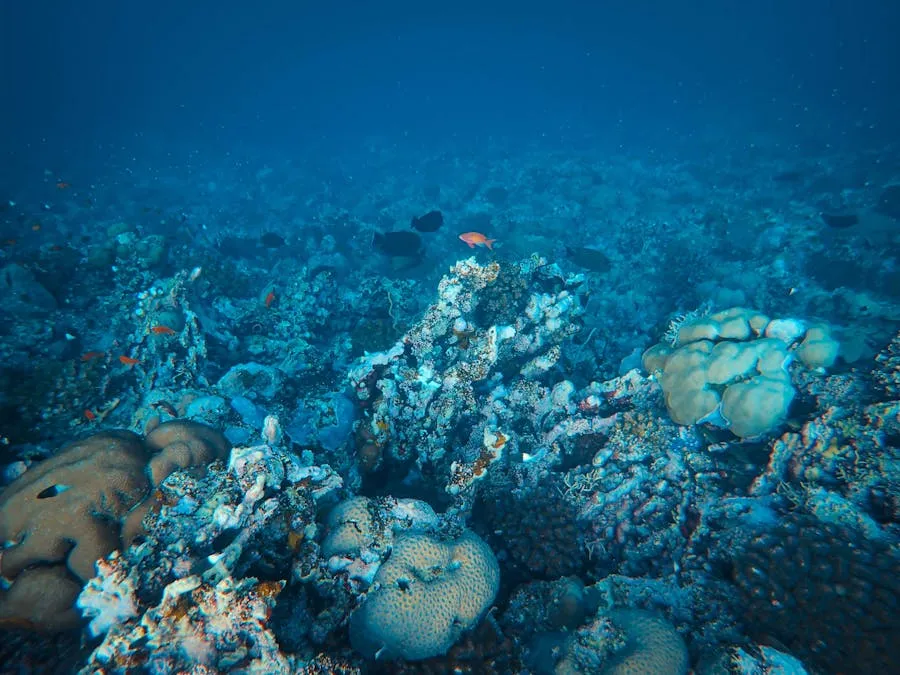
Ras Mohammed National Park near Sharm el-Sheikh consistently ranks among the world's top dive sites. Hard and soft corals, turtles, barracuda schools, and reef sharks. Visibility often exceeds 30 m. Park entry EGP 350 (≈ €6).

White chalk formations in the Western Desert

White Desert

Surreal chalk-white rock formations sculpted by millennia of wind erosion near Farafra. Overnight camping trips from Bahariya Oasis cost EGP 2,900–4,600 (≈ €50–79) per person including meals, 4×4, and guide. Magical under a full moon.

Mortuary Temple of Hatshepsut at Deir el-Bahari

Hatshepsut’s Temple

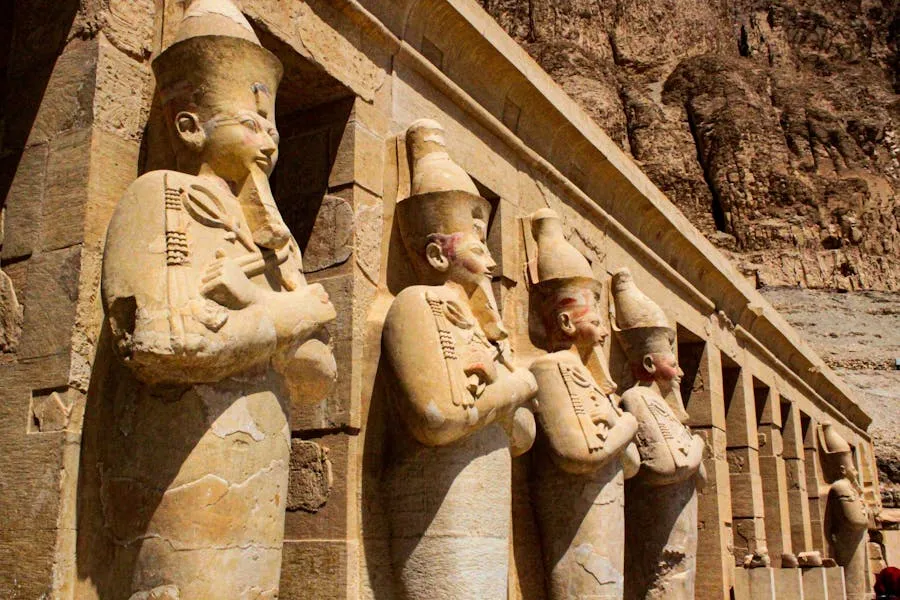
The dramatic terraced Mortuary Temple of Egypt’s most powerful female pharaoh, carved into the cliffs at Deir el-Bahari on Luxor’s West Bank. Three colonnaded levels rise against a sheer limestone amphitheatre. Entry EGP 240 (≈ €4). Best visited at dawn before the heat and crowds.

Step Pyramid of Djoser at Saqqara

Saqqara & the Step Pyramid

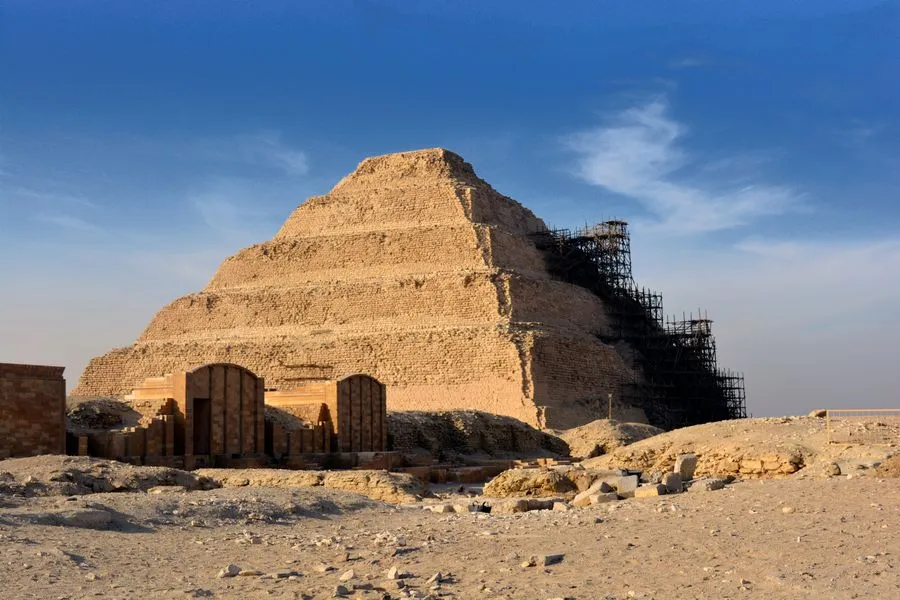
The Step Pyramid of Djoser (c. 2670 BCE) is the world’s oldest monumental stone structure and the prototype for all later pyramids. The surrounding necropolis contains beautifully decorated mastaba tombs with vivid daily-life scenes. Entry EGP 450 (≈ €8). Far fewer crowds than Giza, 30 minutes south of Cairo.

Culture & Cuisine

Interior of Egyptian mosque

Egypt is predominantly Muslim (~90%) with a significant Coptic Christian minority (~10%). Society is warm and hospitable but conservative by Western European standards, particularly outside Cairo’s cosmopolitan quarters. A few cultural norms are worth knowing before arrival.

Etiquette & Customs

  • Dress code — Cover shoulders and knees when visiting mosques and churches. Women may need a headscarf in active mosques (often provided at the entrance). In resort areas (Hurghada, Sharm), beachwear is normal within hotel compounds but not in town.
  • Baksheesh (tipping) — Tipping culture is deeply embedded. EGP 10–20 for small favours, 10–15% at sit-down restaurants, EGP 50–100 for guides and drivers. Carry a supply of small notes — change is perpetually scarce.
  • Photography — Always ask before photographing people, especially women. Photography is banned inside most tombs in the Valley of the Kings. Expect a “photo ticket” fee (EGP 50–100) at some temples and all museums.
  • Haggling — Expected in souks and with taxi drivers (unless using meter apps). Start at 30–40% of the quoted price and work toward a fair middle ground. Fixed prices apply in supermarkets, pharmacies, and official ticket offices.
  • Mosque visits — Non-Muslim visitors are welcome in most mosques outside prayer times. Remove shoes, dress modestly, and speak quietly. Some major mosques charge a small entry fee; neighbourhood mosques are typically free.
  • Greetings — “As-salamu alaykum” (peace be upon you) is the universal greeting. Handshakes are standard between men; wait for a woman to extend her hand first. Learning a few Arabic phrases earns enormous goodwill.
  • Left hand — The left hand is considered unclean. Eat, hand over money, and pass objects with your right hand.
  • Alcohol — Available in tourist hotels, restaurants, and dedicated liquor stores (Drinkies chain). Generally not served during Ramadan outside major hotels. Local beer (Stella, Sakara) costs EGP 40–80 (≈ €0.70–1.40) in shops.

Egyptian Cuisine

Egyptian food is hearty, flavourful, and extraordinarily budget-friendly. Meals revolve around legumes, grains, and fresh vegetables, with grilled meats featuring in more elaborate dishes. Street food is king — a full lunch rarely exceeds EGP 60 (≈ €1). Freshly squeezed juice stands are ubiquitous and irresistible.

  • Koshari — Egypt’s national dish: rice, lentils, macaroni, and chickpeas topped with spiced tomato sauce and crispy fried onions. Served at dedicated koshari shops. EGP 25–50 (≈ €0.40–0.85).
  • Ful medames — Slow-cooked fava beans mashed with olive oil, lemon, and cumin. Egypt’s quintessential breakfast with fresh baladi bread. EGP 15–35.
  • Ta’ameya — Egyptian falafel made from fava beans (not chickpeas), giving a greener colour and lighter texture. Deep-fried and served in bread with salad and tahini. EGP 10–25.
  • Molokhia — Viscous jute-mallow soup flavoured with garlic and coriander, served over rice or with bread. A love-it-or-leave-it texture but deeply traditional.
  • Shawarma & kofta — Spit-roasted meat wraps (EGP 30–60) and grilled spiced minced-meat skewers are everywhere. Full kofta plate with rice EGP 80–150.
  • Feteer meshaltet — Flaky multi-layered pastry, sweet or savoury. Often called “Egyptian pizza.” Best fresh from a dedicated feteer shop. EGP 40–100.
  • Om Ali — Warm dessert of pastry soaked in sweetened milk with raisins, coconut, and nuts. Found on every menu and served during Ramadan iftars. EGP 30–60.
  • DrinksSugarcane juice (asab, EGP 10–20), karkade (sweet hibiscus tea), sahlab (warm thick milk drink with cinnamon), and ahwa (strong Egyptian coffee with cardamom).

Activities & Hikes

Hiker in the Sinai mountains

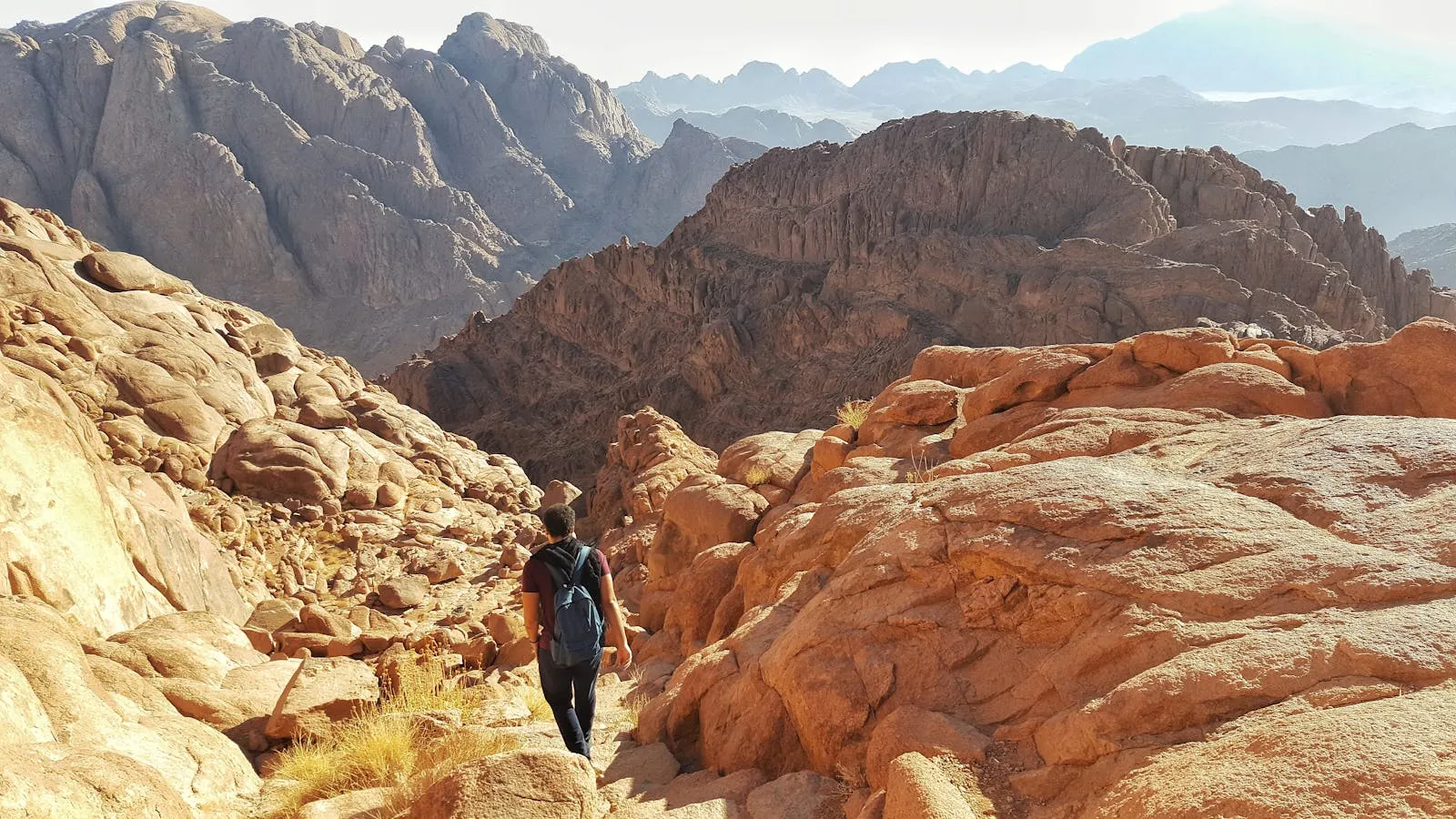
Egypt is not a typical hiking destination, but the Sinai Peninsula and Western Desert offer genuinely rewarding treks — stark mountain landscapes, Bedouin hospitality, and near-total solitude. The best trekking window is October to April; summer heat makes inland walking dangerous.

Top Hikes

HikeLocationDifficulty & LengthHighlights
Mount Sinai sunrise trekEGPModerate – 5–3 hoursThe classic: depart St. Catherine’s Monastery at 2 a.m., climb 750 steps (or the longer camel path) to the 2,285 m summit, and watch dawn light flood the granite peaks. Moderate difficulty, 2.5–3 hours up. Warm layers essential — summit temperatures drop below freezing in winter. Guided groups available from EGP 300 (≈ €5).
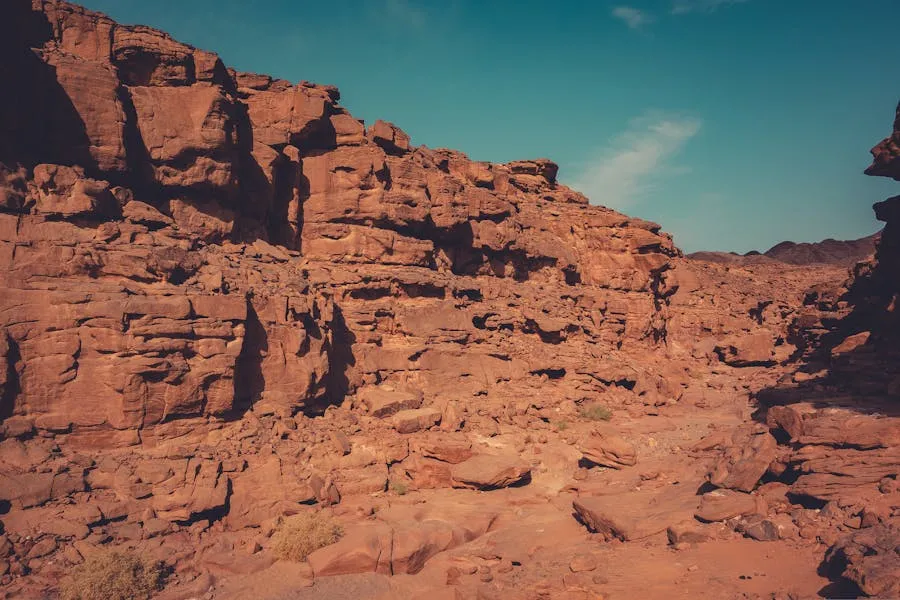
Coloured CanyonNuweibaEasyA narrow slot canyon near Nuweiba with walls streaked in rust, amber, and purple. Easy 2-hour walk through the gorge, some scrambling required. Arrange a 4×4 transfer from Dahab or Nuweiba (EGP 600–900 / ≈ €10–15 per vehicle).
St. Catherine’s trail networkBedouinThe high Sinai region around St. Catherine’s has a developing network of Bedouin-guided trails: Jebel Abbas Basha (highest peak at 2,383 m), Blue Valley, and multi-day desert crossings. Guides mandatory and booked through the monastery or local Bedouin cooperatives.
White Desert overnight trekBahariya OasisGuided walking or 4×4 safari from Bahariya Oasis through surreal chalk-white formations. Camp under stars, cook over fire. 1–3 night itineraries available. EGP 2,900–5,800 (≈ €50–100) per person per night all-inclusive.
Wadi Degla7 kmA protected limestone canyon just 30 minutes from central Cairo — a convenient half-day escape. Fossils embedded in the canyon walls, with well-marked trails of 4–7 km. Entry EGP 30 (≈ €0.50). Bring water and sun protection.

Activities

The Red Sea is one of the planet's premier diving and snorkelling destinations, with warm water, exceptional visibility, and a staggering diversity of marine life. From beginner-friendly house reefs to advanced wall dives and wreck penetration, Egypt covers every level — and does it at a fraction of the cost of comparable destinations in Southeast Asia or the Caribbean.

  • Scuba diving — PADI Open Water courses cost USD 280–400 (far below global average). Two-tank boat dives run EGP 2,300–3,500 (≈ €40–60). Top sites include Ras Mohammed, the SS Thistlegorm wreck (WWII cargo ship at 30 m), the Brothers Islands (hammerheads), and Elphinstone Reef (oceanic whitetips). Liveaboard trips from Hurghada or Port Ghalib offer the best access to remote reefs.
  • Snorkelling — Many Red Sea hotels have house reefs accessible from shore with vibrant coral just metres from the beach. Giftun Island (boat from Hurghada, EGP 600–900 / ≈ €10–15 day trip) and Ras Mohammed are outstanding. Mask-and-snorkel sets rent for EGP 60–120/day.
  • Freediving — Dahab’s Blue Hole — a 100 m deep sinkhole in the reef shelf — is a global freediving pilgrimage site. Training courses and depth sessions run year-round in calm, warm water. Several world records have been set here.
  • Kitesurfing & windsurfing — El Gouna (near Hurghada) and Ras Sudr (Gulf of Suez) offer reliable wind corridors and flat-water lagoons. The season runs April–October. Week-long kite courses from EGP 11,600 (≈ €200).
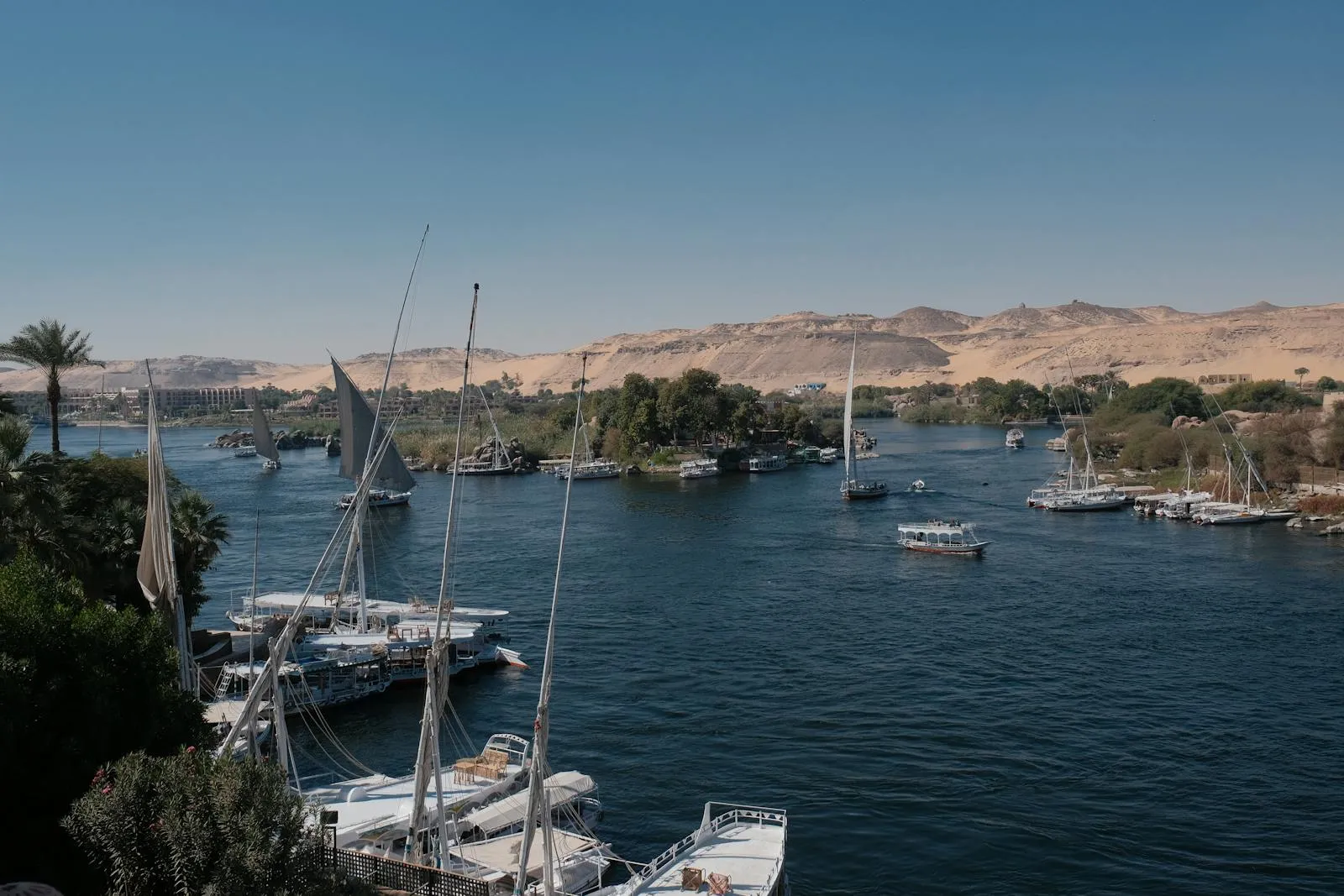
  • Felucca sailing — Traditional wooden sailboats ply the Nile at Aswan and Luxor. A sunset hour costs EGP 500–800 (≈ €9–14) per boat (fits 6–8). Multi-day felucca trips from Aswan to Edfu (2–3 nights) are a classic backpacker experience — sleeping on deck under the stars.

Off the Beaten Path

Beyond the blockbuster monuments, Egypt hides remarkable places that see a fraction of the visitor traffic. These gems reward travellers willing to venture off the standard Cairo–Luxor–Hurghada circuit — often offering richer cultural encounters and dramatic landscapes in near solitude.

Siwa Oasis oracle temple ruins

Siwa Oasis

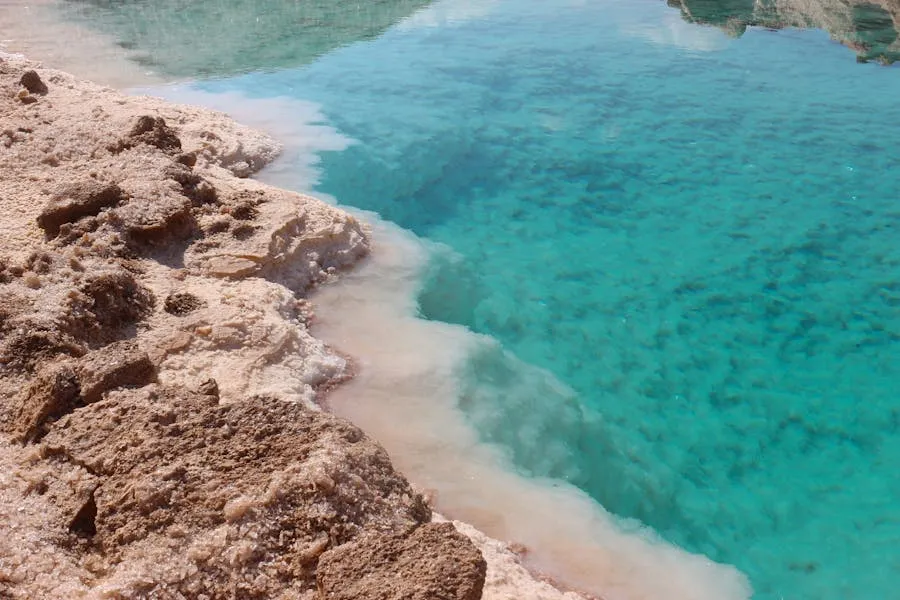
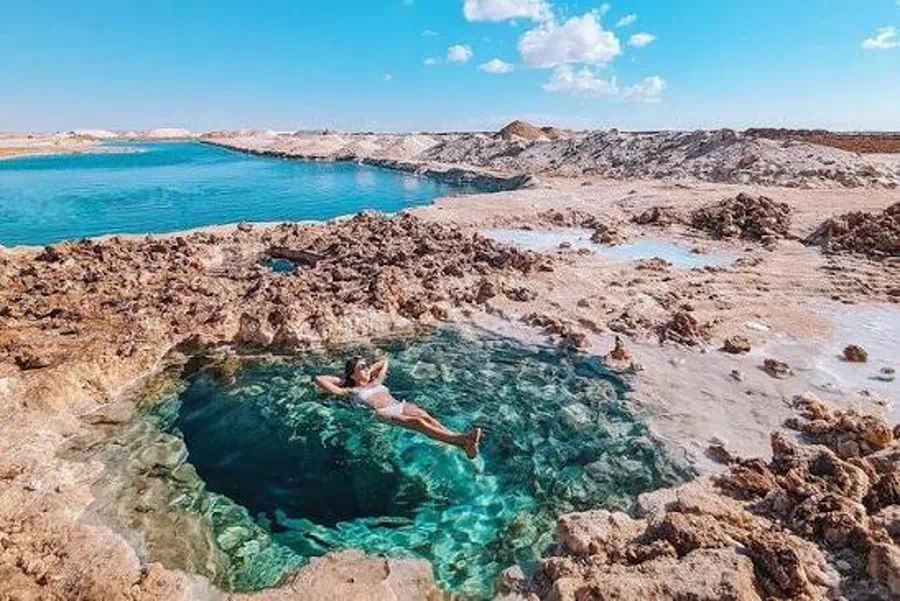
A remote Berber-speaking oasis near the Libyan border, 10 hours by bus from Cairo. Salt lakes glowing turquoise, date-palm groves, mudbrick fortress ruins (Shali), and the Temple of the Oracle where Alexander the Great sought divine confirmation. Stay in a traditional ecolodge. Blissfully disconnected.

Colourful Nubian house in Aswan

Nubian Villages (Aswan)

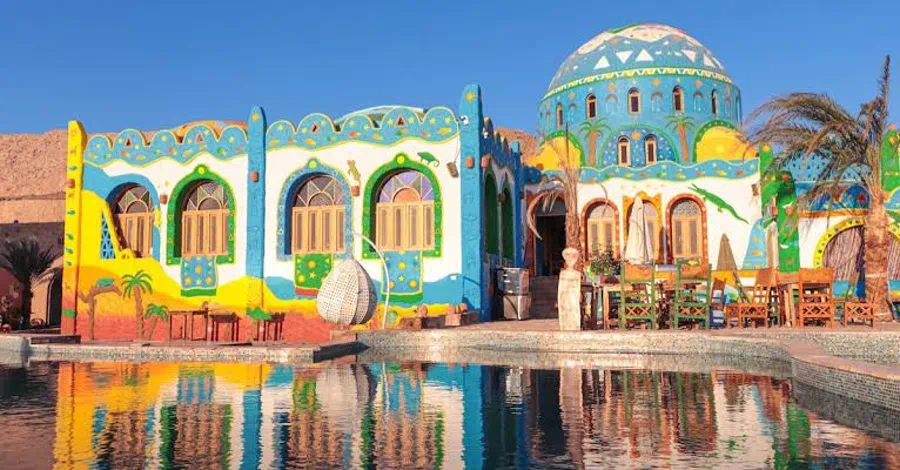
Brightly painted riverside villages on Elephantine Island and the West Bank, home to Egypt's Nubian community. Enjoy home-cooked meals, hold baby crocodiles (a Nubian tradition), and browse handcrafted jewellery. Reached by felucca or motorboat from Aswan corniche.

Painted reliefs at Medinet Habu temple

Medinet Habu

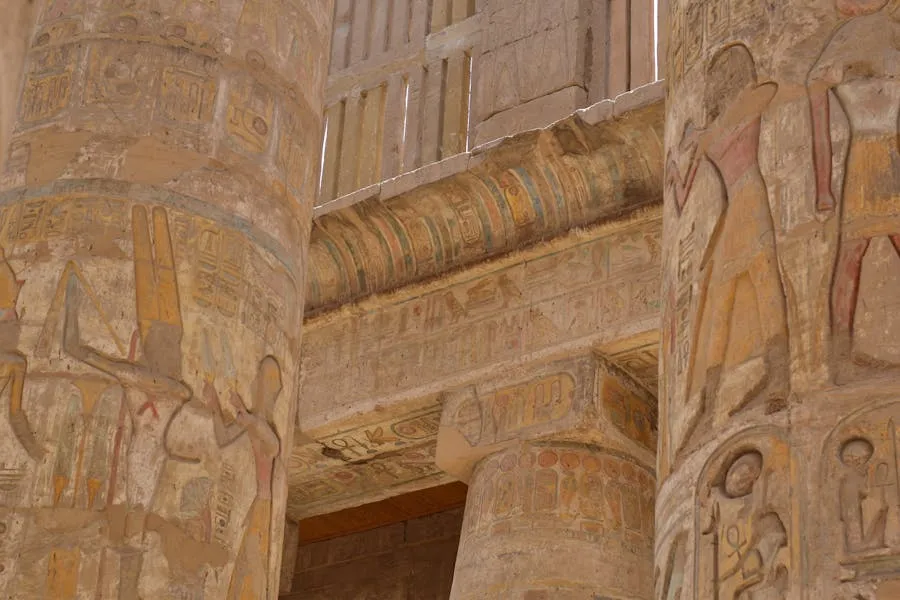
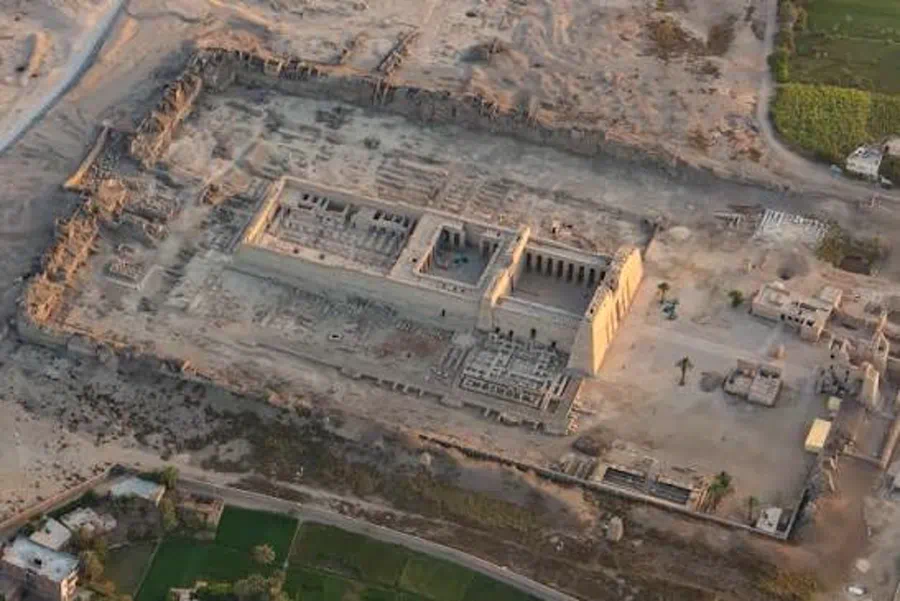
Ramesses III's mortuary temple on Luxor's West Bank — arguably Egypt's most vividly coloured surviving temple, with battle reliefs retaining original paint. Receives a tenth of the visitors that Karnak does. Entry EGP 200 (≈ €3.50).

Aerial view of Dakhla Oasis desert

Dakhla Oasis

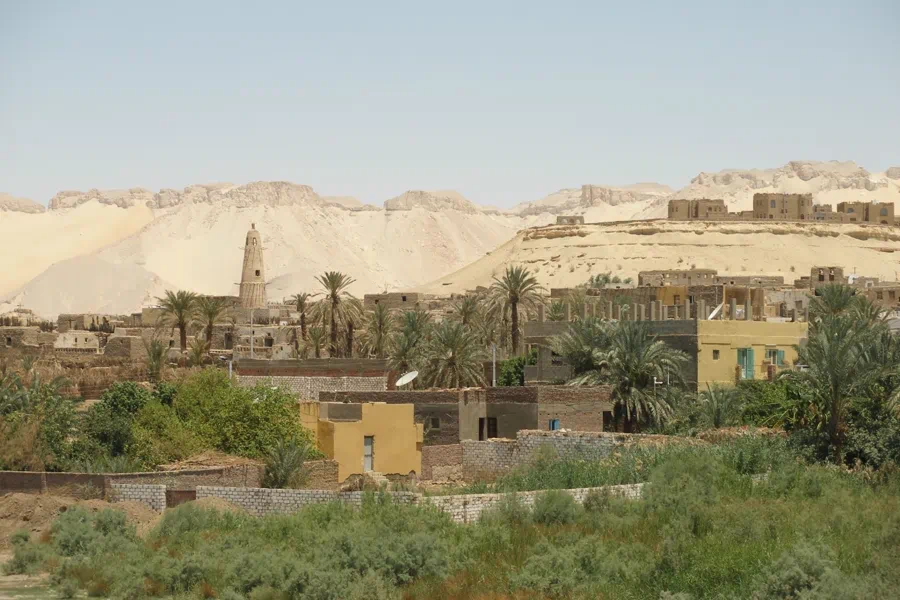
A lush oasis deep in the Western Desert with hot springs, Roman-era ruins at Deir el-Hagar, and the medieval Islamic town of Al-Qasr with its labyrinthine mud-brick alleys. Far fewer tourists than Siwa. Reachable by overnight bus from Cairo or as part of a Western Desert loop.

Gebel el-Silsila sandstone quarry by the Nile

Gebel el-Silsila

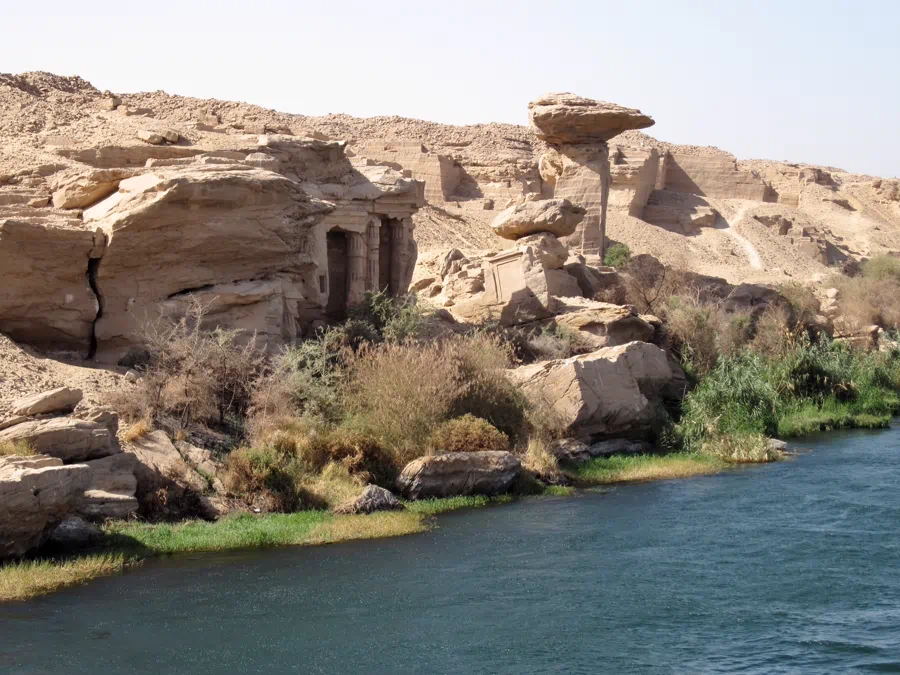
Ancient sandstone quarries carved directly from Nile-side cliffs between Luxor and Aswan. Rock-cut shrines, graffiti from quarry workers, and a dramatic riverside setting. Almost no visitors — stop here on a felucca trip or hire a private boat from Kom Ombo.

Medieval Islamic architecture in Cairo

Al-Muizz Street at Night

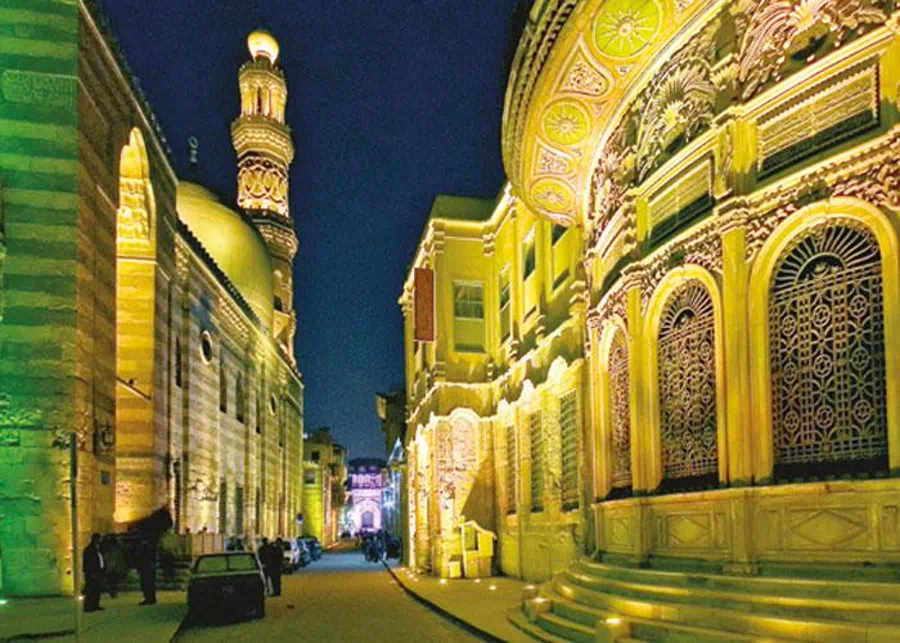
By day it's crowded; after 9 p.m. the medieval street empties and the floodlit mosques, minarets, and Fatimid gates create one of the most atmospheric night walks in any city. Free, safe, and endlessly photogenic. Combine with a late-night ahwa (coffee) at a traditional café.

Wadi El Rayan waterfall in Fayoum

Wadi El Rayan Waterfalls

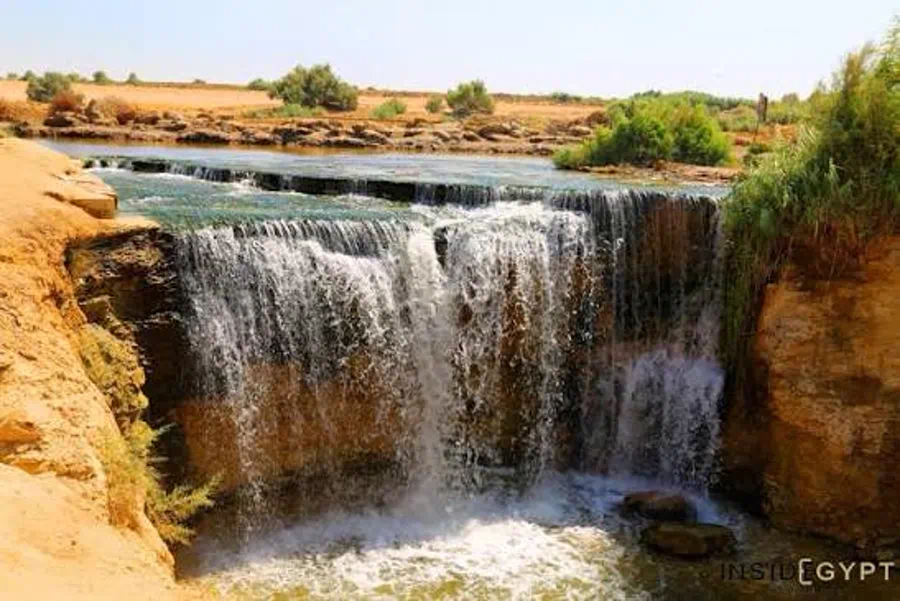
Egypt's only waterfalls — two interconnected lakes in a Fayoum desert canyon, fed by agricultural drainage. Swimming is possible, and the surrounding desert is home to the slender-horned gazelle. A day trip or overnight from Cairo. Entry EGP 30 (≈ €0.50).

Coloured Canyon rock formations in Sinai

Coloured Canyon

A narrow, vivid slot canyon near Nuweiba in the Sinai — striated walls in rust, amber, and purple. Easy-to-moderate 2-hour walk. No facilities; bring water and arrange 4×4 transport from Dahab or Nuweiba.

St. Catherine's Monastery in Sinai

St. Catherine's Monastery

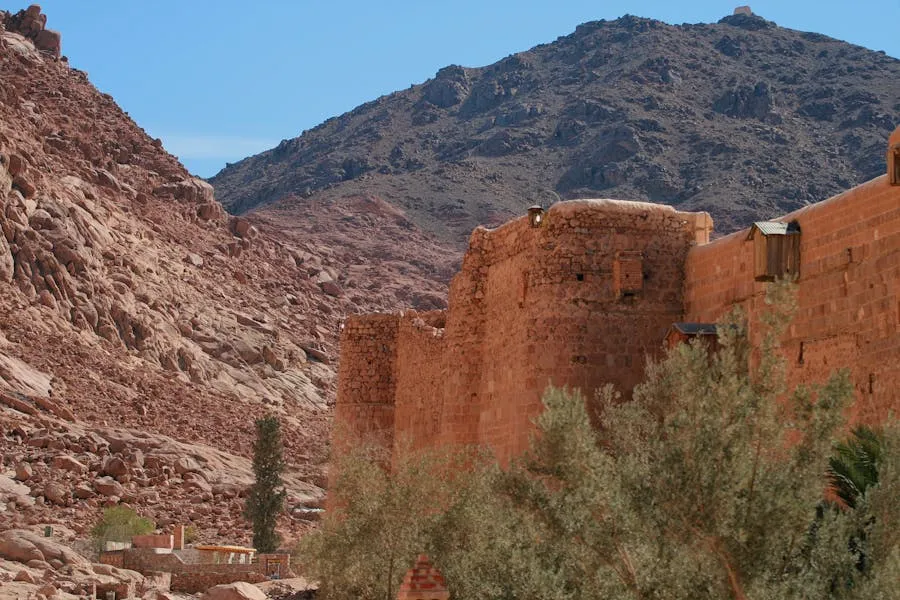
One of the world's oldest continuously operating monasteries (6th century), nestled at the foot of Mount Sinai. Houses the Burning Bush, an extraordinary icon collection, and ancient manuscripts. Free entry; modest dress required. Opens 9 a.m.–12 p.m. (closed Fridays and religious holidays).

Coral reef at Ras Muhammad

Ras Muhammad by Boat

Skip the resort crowds and join a liveaboard or day-boat trip to the tip of the Sinai Peninsula. Shark Reef and Yolanda Reef walls drop into the deep blue — mantas, barracuda tornadoes, and occasional whale sharks. Arguably the single best snorkel/dive in the country.

Wildlife & Nature

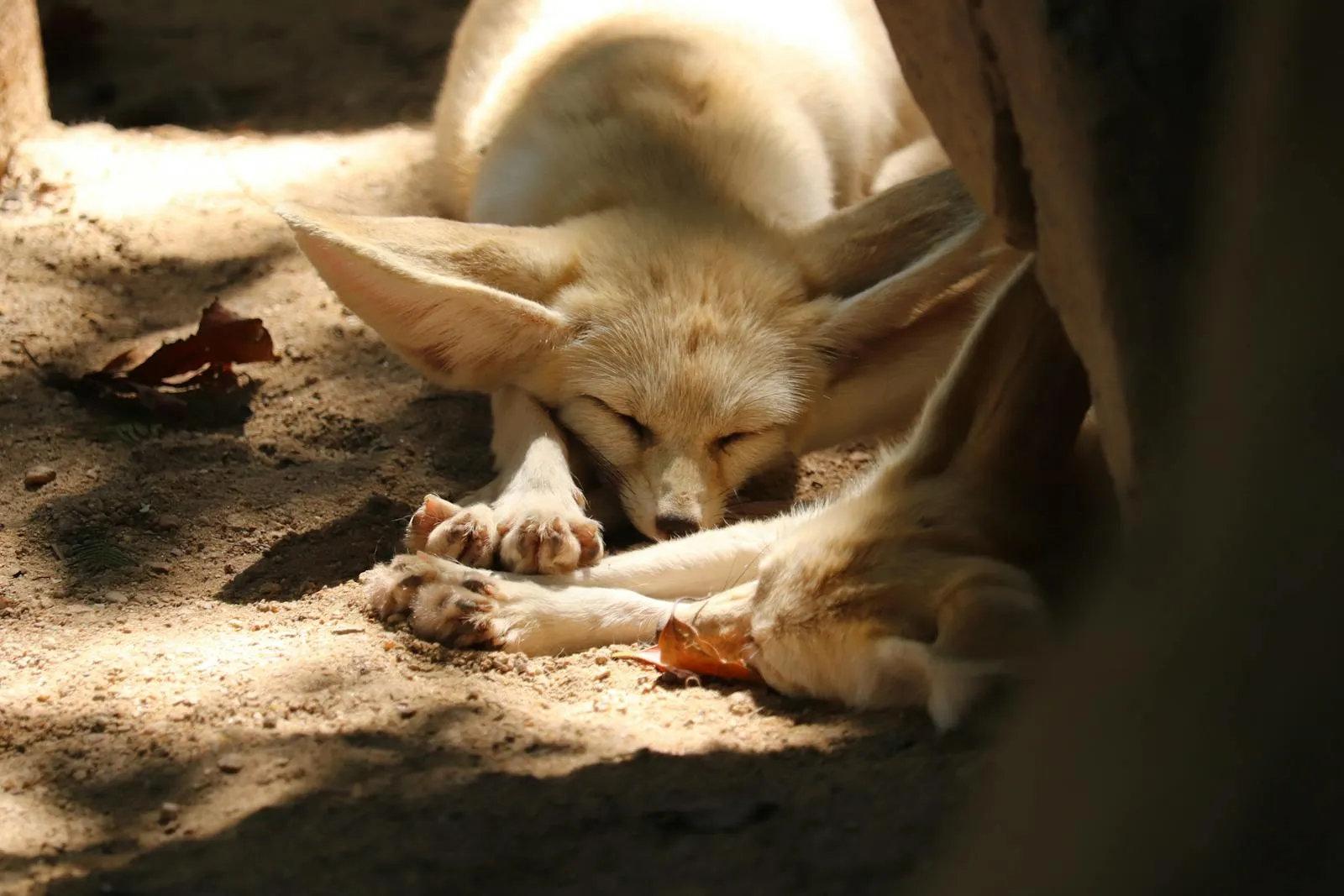
Fennec fox in the desert

Egypt's wildlife highlights are split between the extraordinary marine biodiversity of the Red Sea and the adapted desert fauna of the Sahara and Sinai. Birdwatchers will also find excellent migration stopovers along the Nile and the Mediterranean coast.

  • Marine life — The Red Sea hosts over 1,200 fish species and 250 coral species. Regular encounters include green and hawksbill turtles, spinner dolphins (Samadai Reef), Napoleon wrasse, and massive schools of barracuda. Seasonal visitors: whale sharks (May–August near Daedalus Reef), oceanic whitetip sharks (Elphinstone, Oct–Dec), and hammerheads (Brothers Islands, Jun–Sep).
  • Desert fauna — The Sahara and Sinai support fennec foxes, sand cats, Nubian ibex (Sinai mountains), Dorcas gazelle, and Egyptian vultures. Sightings are rare but possible on desert camping trips — guides know where to look at dusk and dawn.
  • Birding — Egypt sits on the African-Eurasian flyway. Spring (Mar–May) and autumn (Sep–Nov) bring huge raptor migrations through the Gulf of Suez. Lake Nasser islands host Nile Valley sunbirds and African fish eagles. Fayoum’s Lake Qarun attracts flamingos and pelicans in winter.
  • Wadi al-Hitan (Valley of the Whales) — A UNESCO World Heritage site in the Fayoum desert preserving 40-million-year-old whale fossils — complete skeletons of early cetaceans visible on the desert surface. A surreal open-air palaeontology museum. Entry EGP 50 (≈ €0.85); 4×4 transfer required from Fayoum town.

Route A: Classic Nile (10–12 Days)

Egyptian temple along the Nile

The quintessential first-time Egypt itinerary: Cairo's pyramids and museums, the Nile Valley's pharaonic heartland, and a climactic sunrise at Abu Simbel. This route works well between October and March and covers Egypt's greatest hits without excessive rushing.

📅 Best Timing

October–March (peak/shoulder). Ideal temperatures for temple visits (20–30 °C). February 22 catches the Abu Simbel Sun Festival. Total budget per person: approximately EGP 17,400–34,800 (≈ €300–600) excluding international flights.

Day-by-day itinerary

Day 1–3: Cairo

Day 1: Arrive Cairo. Settle in Downtown or Zamalek. Evening walk along the Nile Corniche. Day 2: Giza Plateau early morning (Pyramids, Sphinx), then the Grand Egyptian Museum — allow the full afternoon. Day 3: Islamic Cairo (Al-Muizz Street, Khan el-Khalili, Citadel of Saladin, Sultan Hassan Mosque). Afternoon: Coptic Cairo or Egyptian Museum (Tahrir). Book overnight sleeper train to Luxor.

Day 4: Arrive Luxor

Arrive early morning by sleeper train (departs Cairo ~8 p.m., arrives Luxor ~6 a.m.). Check into hotel. Afternoon: Luxor Temple and the Avenue of Sphinxes at sunset. Rest and acclimatise to the heat. Optional: Luxor Museum for a less crowded, superbly curated experience.

Day 5–6: Luxor East & West Banks

Day 5: West Bank at dawn — Valley of the Kings (3 tombs + optional Tutankhamun upgrade), Hatshepsut's Temple (Deir el-Bahari), Medinet Habu, Colossi of Memnon. Bicycle or shared taxi from the ferry. Day 6: Karnak Temple Complex (morning, 2–3 hours). Afternoon free for the souk, a Nile felucca ride, or the West Bank hot-air balloon flight (if budget allows, ~EGP 4,600 / ≈ €79).

Day 7–8: Nile Cruise to Aswan

Board a felucca or motorised cruise from Luxor heading south. Stop at Edfu (Temple of Horus — one of Egypt's best-preserved) and Kom Ombo (unusual dual temple dedicated to Sobek and Horus). Sleep on deck (felucca) or in a cabin. Arrive Aswan by Day 8 afternoon.

Day 9: Aswan

Morning: Philae Temple by motorboat (arrive early for fewer crowds). Afternoon: Nubian Museum, Elephantine Island walk, spice souk. Late afternoon: felucca sunset sail around Kitchener's Island (botanical garden). Evening: Nubian dinner on the West Bank.

Day 10: Abu Simbel

Pre-dawn convoy or 45-minute flight to Abu Simbel. Explore Ramesses II's Great Temple and Nefertari's smaller temple at leisure. Return to Aswan by early afternoon. Evening: final Nile-side dinner.

Day 11–12: Return to Cairo

Fly or take the sleeper train back to Cairo. Day 11: catch anything missed — Saqqara and Dahshur pyramids make an excellent half-day trip. Day 12: departure, or extend to Alexandria for a Mediterranean coast day.

Route B: Egypt & Red Sea (14 Days)

Sailboats on the Nile near Aswan

Combines the essential Nile Valley temples with Red Sea diving and beach time. Best suited for travellers who want ancient history and underwater adventure in a single trip. Works well October through April.

📅 Best Timing

October–April. Comfortable temple weather plus excellent Red Sea diving conditions. Water visibility peaks in autumn. Total budget per person: approximately EGP 23,200–46,400 (≈ €400–800) excluding international flights.

Day-by-day itinerary

Day 1–3: Cairo

Pyramids of Giza and Grand Egyptian Museum (Day 1–2). Islamic Cairo walking tour: Al-Muizz Street, Khan el-Khalili, Citadel (Day 3). Optional evening: Sound-and-Light show at the Pyramids.

Day 4–6: Luxor

Fly or sleeper-train to Luxor. West Bank full day (Valley of the Kings, Hatshepsut, Medinet Habu). East Bank (Karnak, Luxor Temple at night, Avenue of Sphinxes). One free morning for hot-air balloon, cycling the West Bank, or Luxor Museum.

Day 7–8: Aswan & Abu Simbel

Train or cruise to Aswan. Philae Temple, Nubian Museum, felucca sunset. Day 8: early-morning Abu Simbel day trip (3-hour drive or 45-minute flight). Return to Aswan by lunch.

Day 9: Transfer to Red Sea

Fly Aswan → Hurghada (1 hour, several weekly flights) or take a bus via Luxor (5–6 hours total). Check into dive-friendly accommodation in Hurghada, El Gouna, or Marsa Alam.

Day 10–12: Red Sea Diving & Beach

Two to three days of diving or snorkelling. Day-boat trips to Giftun Island, Abu Nuhas wrecks (four shipwrecks in shallow water), or Ras Mohammed from Sharm. Non-divers: glass-bottom boats, desert quad-biking, or pure beach relaxation. PADI courses can be started and finished in this window.

Day 13–14: Return to Cairo & Departure

Fly or bus back to Cairo. Day 13: Saqqara and Dahshur (less-visited pyramid fields, far fewer crowds than Giza). Final evening in Downtown Cairo. Day 14: departure.

Route C: Deep Egypt (3 Weeks)

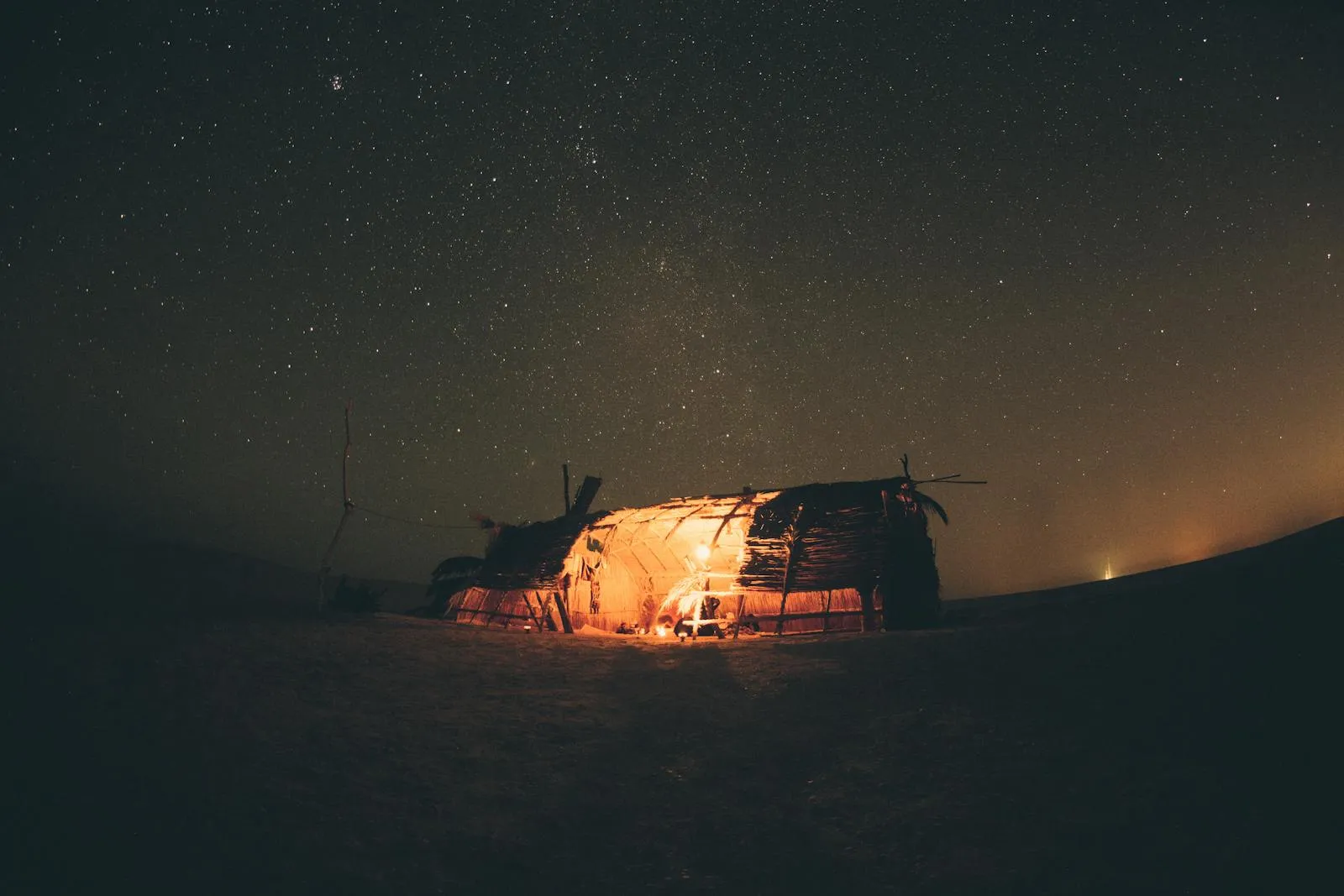
Desert camp under the stars in Egypt

The full Egypt experience: pharaonic monuments, Western Desert oases, Red Sea reefs, and Sinai mountains. This route demands flexibility and some tolerance for long bus rides, but delivers an extraordinarily varied three weeks that most short-trip visitors never see.

📅 Best Timing

November–February (cool season). Essential for the Western Desert and Sinai trekking legs, where daytime temperatures are comfortable and nights are manageable. Total budget per person: approximately EGP 34,800–58,000 (≈ €600–1,000) excluding international flights.

Day-by-day itinerary

Day 1–3: Cairo

Giza Pyramids and Grand Egyptian Museum (Day 1–2). Islamic Cairo (Al-Muizz Street, Citadel, Khan el-Khalili) and Coptic Cairo (Day 3). Evening: rooftop dinner overlooking the pyramids or a Nile dinner cruise.

Day 4–5: Fayoum

Bus or taxi south to Fayoum (90 min). Wadi al-Hitan (Valley of the Whales, UNESCO) — 40-million-year-old whale fossils on the desert surface. Wadi El Rayan waterfalls for a swim. Lake Qarun birdwatching. Overnight in a Fayoum ecolodge. Return to Cairo evening of Day 5.

Day 6–8: Western Desert

Bus to Bahariya Oasis (4 hours from Cairo). Join a 2-night desert safari: Black Desert volcanic hills, Crystal Mountain, then into the White Desert for an overnight camp among chalk formations under a canopy of stars. Campfire dinner, sunrise photography. Continue to Farafra or return to Bahariya.

Day 9–11: Luxor

Bus or fly from Cairo to Luxor. West Bank (Valley of the Kings, Hatshepsut, Medinet Habu, Ramesseum). East Bank (Karnak, Luxor Temple at night). Optional: hot-air balloon at sunrise, cycling the West Bank, or Luxor Museum.

Day 12–13: Aswan & Abu Simbel

Train to Aswan. Philae Temple, Nubian village visit, felucca sunset. Day 13: pre-dawn Abu Simbel excursion. Afternoon at Aswan souk or the Unfinished Obelisk quarry.

Day 14–15: Hurghada / Red Sea

Fly or bus to Hurghada. Two days of diving, snorkelling (Giftun Island, Abu Nuhas wrecks), or kitesurfing at El Gouna. Evening: seafront seafood dinner.

Day 16–17: Dahab

Bus along the Red Sea coast and through the Ahmed Hamdi Tunnel under the Suez Canal, or ferry across from Hurghada to Sharm and taxi north. Blue Hole freediving/diving, Canyon dive site. Coloured Canyon day trip (4×4 to Nuweiba). Seafront cafés, backpacker vibe.

Day 18: Mount Sinai & St. Catherine's

Taxi to St. Catherine's village (1.5 hours). Afternoon: visit St. Catherine's Monastery (open 9 a.m.–12 p.m.). Sleep early; depart 2 a.m. for the Mount Sinai sunrise trek (2,285 m). Descend, breakfast, return to Dahab or continue to Sharm.

Day 19–20: Sharm el-Sheikh & Ras Mohammed

Ras Mohammed National Park for world-class snorkelling or diving (Shark Reef, Yolanda Reef). Day 20: relax at Naama Bay, explore Old Sharm market, or take a glass-bottom boat. Evening: book return flight or bus to Cairo.

Day 21: Return to Cairo & Departure

Fly Sharm → Cairo (1 hour) or overnight bus. Final morning: Saqqara pyramids or last-minute souvenir shopping at Khan el-Khalili. Departure.

Getting Around

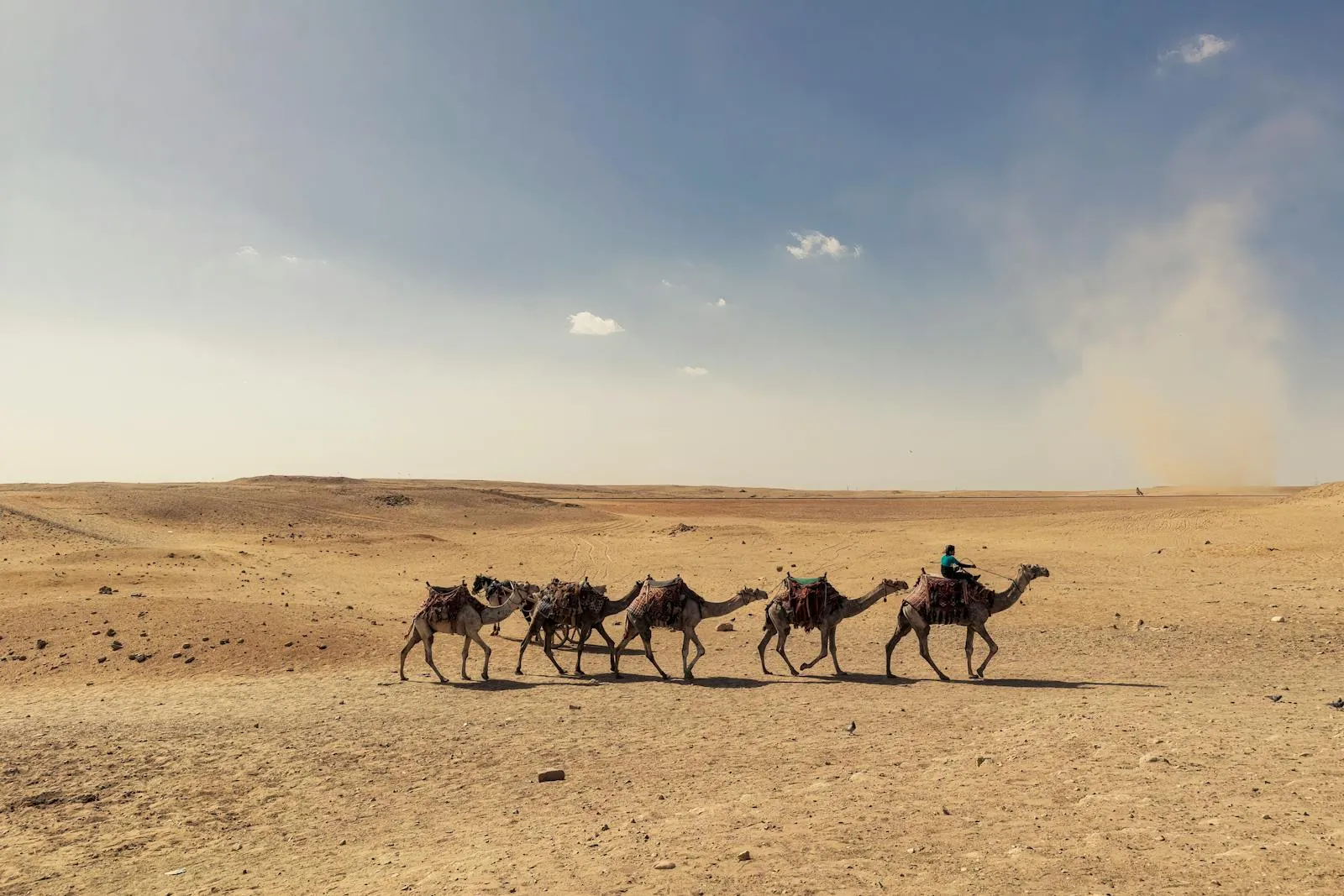
Camel caravan crossing the Egyptian desert

✈️ Domestic flights

— EgyptAir, Air Cairo, and Nile Air connect Cairo with Luxor, Aswan, Hurghada, Sharm el-Sheikh, and Abu Simbel.

🚆 Trains

— Egyptian National Railways runs the Cairo–Luxor–Aswan corridor.

🚅 Intercity buses

— Go Bus and Blue Bus are the main operators — modern, air-conditioned coaches with USB charging.

🚗 Ride-hailing (Uber /...

— Widely available in Cairo, Alexandria, Hurghada, and Sharm. Far cheaper and less stressful than street taxis.

🚇 Cairo Metro

— Three lines covering central Cairo, Giza, and suburbs. Clean, fast, air-conditioned.

🚌 Microbuses

— The cheapest (EGP 5–15 for city hops) but most chaotic option. Unmarked minivans following fixed routes.

🚙 Tuk-tuks

— Three-wheeled motor-rickshaws common in Luxor, Aswan, and smaller towns.

⛵ Feluccas & motorboats

— Essential transport in Aswan (to islands and Nubian villages). Felucca hour-hire: EGP 500–800 (≈ €9–14).

Egypt has a surprisingly well-connected transport network. Domestic flights, overnight trains, and modern intercity buses link all major destinations. Within cities, ride-hailing apps have largely eliminated the need to negotiate with taxi drivers. Distances are long — Cairo to Luxor is 660 km, Cairo to Aswan 900 km — so factor in travel time or fly.

  • Domestic flights — EgyptAir, Air Cairo, and Nile Air connect Cairo with Luxor, Aswan, Hurghada, Sharm el-Sheikh, and Abu Simbel. One-way fares from EGP 2,000 (≈ €34) booked online. Flight time Cairo–Luxor: 1 hour. Book 2–3 weeks ahead for best prices.
  • Trains — Egyptian National Railways runs the Cairo–Luxor–Aswan corridor. Sleeper train: departs Cairo ~8 p.m., arrives Luxor ~6 a.m. Comfortable two-berth cabins with dinner and breakfast included. EGP 1,500 (≈ €26) one way. Day trains: 1st class EGP 350–500 (≈ €6–9), air-conditioned, reserved seats. Tickets from stations or online at enr.gov.eg.
  • Intercity buses — Go Bus and Blue Bus are the main operators — modern, air-conditioned coaches with USB charging. Cairo–Hurghada ~6 hours, EGP 300–500 (≈ €5–9). Cairo–Sharm ~7 hours. Cairo–Alexandria ~2.5 hours, EGP 150–250. Book online or at station. Upper Egypt Bus Co. covers Luxor–Hurghada (~5 hours).
  • Ride-hailing (Uber / Careem / inDrive) — Widely available in Cairo, Alexandria, Hurghada, and Sharm. Far cheaper and less stressful than street taxis. A 30-minute Cairo ride costs EGP 60–120 (≈ €1–2). Always use the app for pricing — no need to negotiate.
  • Cairo Metro — Three lines covering central Cairo, Giza, and suburbs. Clean, fast, air-conditioned. Tickets EGP 8–12 (≈ €0.14–0.21) depending on distance. Women-only cars available in the middle of each train.
  • Microbuses — The cheapest (EGP 5–15 for city hops) but most chaotic option. Unmarked minivans following fixed routes. Useful for short hops between towns — ask locals for the right pick-up point. No schedules; they leave when full.
  • Tuk-tuks — Three-wheeled motor-rickshaws common in Luxor, Aswan, and smaller towns. Negotiate the fare before boarding — typical short rides EGP 20–50 (≈ €0.35–0.85).
  • Feluccas & motorboats — Essential transport in Aswan (to islands and Nubian villages). Felucca hour-hire: EGP 500–800 (≈ €9–14). Motorboat to Philae Temple: EGP 200–300 per boat. Negotiate firmly.

Budget Breakdown

Egyptian market scene

Egypt is one of the most affordable travel destinations accessible from Europe. The Egyptian Pound has weakened significantly against major currencies, making the country exceptional value at every budget tier. Street food costs pennies, transport is cheap, and even private guides are affordable by international standards.

BackpackerMid-RangeComfort
Daily totalEGP 1,200–1,800 (≈ €21–31)EGP 2,900–4,600 (≈ €50–79)EGP 5,800–11,600 (≈ €100–200)
AccommodationHostel dorm EGP 350–600Private double EGP 1,200–2,3004-star hotel EGP 2,900–5,800
FoodStreet food + local restaurants EGP 150–300/dayMix of local & tourist restaurants EGP 500–900/dayHotel restaurants & upscale dining EGP 1,200–2,300/day
TransportBuses, metro, shared taxis EGP 100–250/dayUber, trains, occasional flights EGP 300–600/dayPrivate driver, domestic flights EGP 1,200–2,300/day
ActivitiesMajor site tickets only EGP 400–600/daySites + guided tours EGP 900–1,500/dayPrivate guide + premium experiences EGP 2,300–4,600/day

Money-Saving Tips

🍴 Street Food

Kushary (lentils, pasta, rice) costs EGP 30–50 (€0.60–1). Ful medames and tamiya sandwiches: EGP 10–20

🚌 Microbus & Metro

Cairo Metro: EGP 8 per ride. Microbuses between cities cost a fraction of tourist coaches

📅 Shoulder Season

March–April and October–November: pleasant weather, 30–40% cheaper than peak winter (Dec–Feb)

🎨 Student Discounts

ISIC cards get 50% off most ancient sites. Entry savings add up fast when visiting multiple temples and tombs

💰 Negotiate Everything

From taxis to souvenirs, the first price is never final. Start at 30–40% of the asking price and work up

🏠 Budget Hotels

Clean budget hotels in Luxor and Aswan start at EGP 400–600 (€8–12) per night with breakfast and Nile views

Practical Information

Egyptian street scene

💳 Visas

— Most nationalities can obtain an e-visa online at visa2egypt.gov.eg (single entry ~USD 25, multiple entry ~USD 60, processed in 5–7 business days).

🏥 Health

— No mandatory vaccinations, but hepatitis A, typhoid, and routine boosters are recommended. Tap water is not potable — drink bottled or filtered.

💶 Money

Egyptian Pound (EGP). Cash preferred outside hotels. ATMs in cities. ~1 EUR = 50 EGP

📶 SIM & WiFi

— Buy a SIM at the airport from Vodafone, Orange, or Etisalat. 10–20 GB data plans cost EGP 200–400 (≈ €3.50–7) for 30 days.

🔌 Electricity

— 220 V / 50 Hz with Type C and F plugs (standard European two-pin). Bring a universal adapter if coming from outside Europe.

🛒 Safety

— Tourist areas are heavily policed and generally safe.

Egypt is straightforward to visit with a little preparation. The visa process is easy, healthcare infrastructure in Cairo is adequate, and English is widely spoken in tourist areas. A few practical details will smooth your trip considerably.

  • Visa — Most nationalities can obtain an e-visa online at visa2egypt.gov.eg (single entry ~USD 25, multiple entry ~USD 60, processed in 5–7 business days). Visa-on-arrival is also available at Cairo, Hurghada, Sharm, and Luxor airports — same fee, but queues can be long. Some nationalities (e.g., EU, US, UK) get 30-day visa stamps. Always check current requirements before departure.
  • Health — No mandatory vaccinations, but hepatitis A, typhoid, and routine boosters are recommended. Tap water is not potable — drink bottled or filtered. “Pharaoh’s revenge” (travellers’ diarrhoea) is common; carry Imodium and rehydration salts. Pharmacies are plentiful and sell most medications over the counter at low cost.
  • SIM card & connectivity — Buy a SIM at the airport from Vodafone, Orange, or Etisalat. 10–20 GB data plans cost EGP 200–400 (≈ €3.50–7) for 30 days. 4G coverage is good in cities and along the Nile; patchy in the Western Desert and deep Sinai.
  • Safety — Tourist areas are heavily policed and generally safe. Petty scams (inflated taxi fares, “free” gifts followed by payment demands, fake guides) are more common than violent crime. Use Uber/Careem to avoid taxi negotiations. The Tourism Police (126) are responsive. Avoid political demonstrations. Women travelling solo may experience persistent verbal attention — dress conservatively and walk with confidence.
  • What to pack — Sun hat, high-SPF sunscreen, reusable water bottle with filter, comfortable walking shoes (temple floors are uneven), a light scarf (for mosques and sun protection), layers for desert evenings (temperatures drop sharply after sunset), and a waterproof phone pouch if doing water activities.
  • Electricity — 220 V / 50 Hz with Type C and F plugs (standard European two-pin). Bring a universal adapter if coming from outside Europe. Power cuts are rare in tourist areas but carry a small power bank for long day trips.
  • Language — Egyptian Arabic is the primary language. English is widely spoken in hotels, tour agencies, and tourist sites. French is understood in some upscale Cairo circles. Basic Arabic phrases — “shukran” (thank you), “la” (no), “bikam?” (how much?) — go a long way.
  • Opening hours — Most temples and archaeological sites open 6 a.m.–5 p.m. (winter) or 6 a.m.–6 p.m. (summer). Museums typically 9 a.m.–5 p.m. The GEM has extended evening hours. Friday prayer (12–2 p.m.) may affect some mosque access.

Tips & Common Mistakes

Egyptian landscape

Egypt rewards preparation and a sense of humour. These tips are drawn from common traveller experiences — learning from others' mistakes saves time, money, and frustration.

  • Carry a card for sites — Since late 2024, most major archaeological sites accept only Visa or Mastercard at ticket booths — no cash. This catches many visitors off guard. Carry at least one card with chip-and-PIN functionality.
  • Start early, rest midday — Temples and pyramids are best visited at opening (6 a.m.) when temperatures are tolerable and tour groups haven’t arrived. Retreat to air conditioning between 12–3 p.m. in summer. Resume in late afternoon.
  • Don’t skip Medinet Habu — Most visitors rush through the Valley of the Kings and Karnak but miss this Luxor West Bank gem — arguably Egypt’s most vivid surviving painted reliefs. A fraction of the crowds.
  • Book Abu Simbel transport early — The dawn convoy from Aswan fills up in peak season. Book through your hotel 1–2 days ahead. Alternatively, the 45-minute EgyptAir flight eliminates the 3-hour drive each way.
  • Use Uber / Careem everywhere — Eliminates haggling, provides fixed pricing, and tracks your route. Available in Cairo, Alexandria, Hurghada, and Sharm. Game-changer for stress-free transport.
  • Dress to enter, not to impress — Conservative modest clothing opens doors — literally. Many mosques, churches, and even some government buildings refuse entry to visitors in shorts or sleeveless tops. A light linen shirt and long trousers work everywhere.
  • Drink constantly — Dehydration is the most common traveller health issue. Carry a reusable bottle and refill from sealed water or filtered sources. Aim for 3+ litres daily in summer, even if you don’t feel thirsty.
  • Learn to say no firmly — “No thank you” (la shukran) is your most useful phrase. Touts, self-appointed guides, and camel-ride salesmen at the pyramids can be extremely persistent. A firm, friendly “la shukran” repeated without engagement is the most effective strategy.
  • Avoid Friday afternoons for sightseeing — Friday is the Muslim holy day. Many locals visit sites in the afternoon, making popular spots noticeably busier. Morning visits are fine; the afternoon surge starts around 2 p.m.
  • Travel insurance is essential — Medical evacuation from Upper Egypt or Sinai is expensive. Ensure your policy covers adventure activities (diving, trekking) if planned. Keep a digital copy of your policy on your phone.

Final Recommendation

Egyptian sunset view

Egypt delivers on its extraordinary promise. The Pyramids and the Valley of the Kings genuinely stun in person — no photograph or documentary prepares you for the scale. But the country's real magic lies in the layers beyond the headlines: the White Desert's silence at midnight, the coral gardens of Ras Mohammed at depth, a Nubian grandmother's home-cooked meal beside the Nile, the sound of the call to prayer echoing across Cairo at dusk.

Expect some friction — persistent touts, chaotic traffic, searing midday heat — and accept it as part of the experience rather than a flaw. Egypt is not a "smooth" destination, but it is an unforgettable one. Travel with curiosity, patience, and a willingness to engage, and the country rewards you tenfold.

Two weeks is the sweet spot for a first visit: enough time for Cairo, the Nile Valley, and either the Red Sea or the Western Desert. Three weeks lets you combine all three. And if you only have 10 days, the Classic Nile route (Route A) covers the essentials without rushing. However long you have, start planning around the season — October to March for temples, any time for the coast — and let the rest fall into place.